
Cat litter is something every cat parent uses daily — but not many people think about whether it’s safe for humans. If you’ve ever noticed dust in the air, a strong ammonia smell, or wondered whether litter ingredients could affect your health, you’re not alone.
In this comprehensive guide, you’ll learn:
- Whether cat litter is toxic to humans
- Which types of litters are safer
- Health risks like ammonia, dust inhalation, and bacteria
- How to handle cat litter properly
- When you should switch to another litter
- The best non-toxic cat litter alternatives
This is a must-read for every cat owner who wants a cleaner, healthier home.
Is Cat Litter Toxic to Humans?
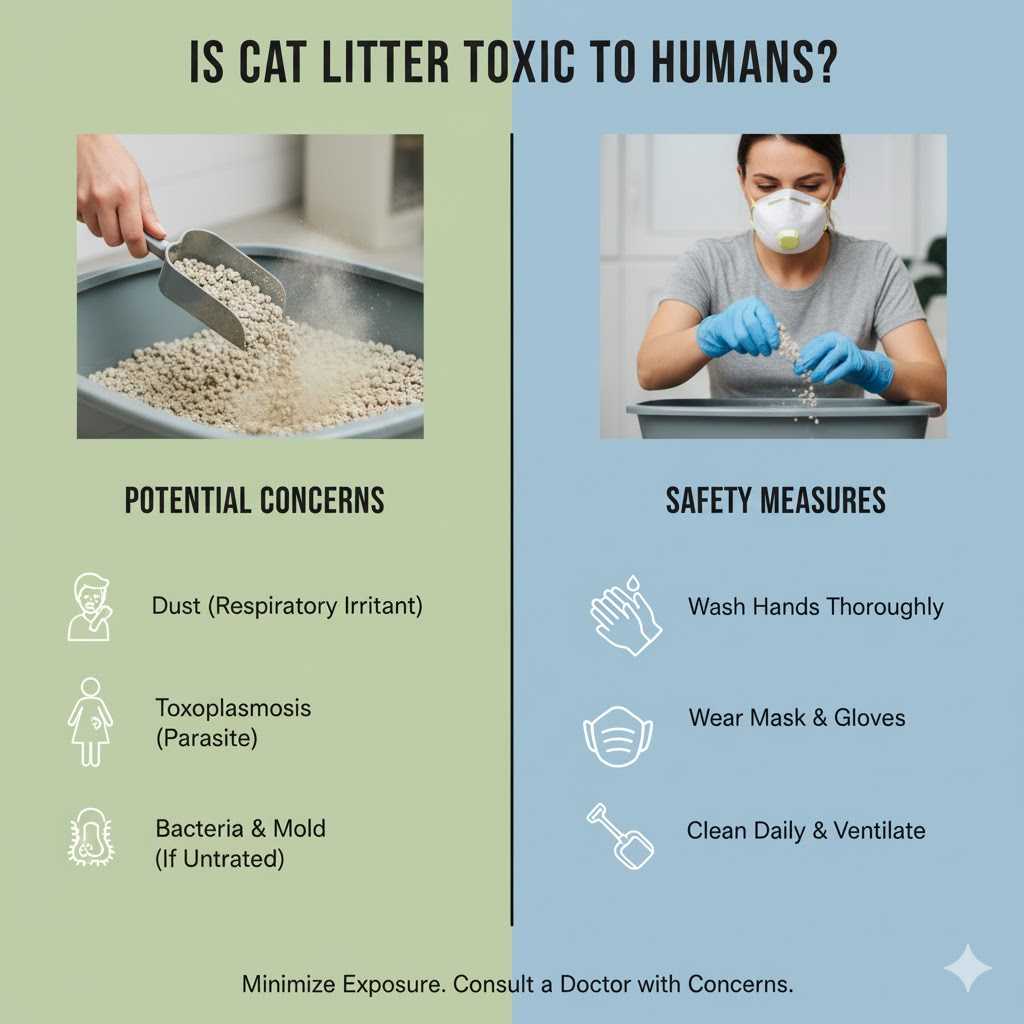
Cat litter is not usually toxic to humans, but it can cause health issues depending on the type of litter, dust levels, and ammonia buildup from cat urine.
Potential risks include:
- Breathing problems from dust
- Ammonia exposure from urine
- Bacterial infections
- Toxoplasma gondii (in rare cases)
- Skin or eye irritation
So while the litter itself isn’t “poisonous,” improper handling or bad ventilation can make it unhealthy.
Let’s break it down type by type.
Types of Cat Litter & Their Risks
1. Clay / Clumping Litter (Bentonite Clay)
This is the most common litter — and the most controversial.
Risks for Humans
- Dust inhalation (can trigger asthma or coughing)
- Contains silica dust, a known respiratory irritant
- Can cause skin irritation
- Strong ammonia smell when wet
Not toxic in the sense of poisoning, but long-term exposure to dust isn’t good for your lungs.
2. Silica Gel Crystal Litter
Made from sodium silicate.
Risks
- Silica dust can irritate the lungs
- Low toxicity but can cause discomfort when inhaled
- Better than clay, but not ideal for people with allergies
3. Natural Litters (Corn, Wheat, Wood, Paper)
These are the safest for humans.
Benefits
- Low dust
- Biodegradable
- No synthetic chemicals
Risks
- Mold growth in corn or wheat if stored improperly
- Allergies for people sensitive to grains
Overall, these are the healthiest options.
4. Scented Litters
Scented litters often contain:
- Artificial perfumes
- Chemicals
- Deodorizers
These can irritate lungs, eyes, and skin — especially for children or sensitive adults.
Health Risks of Cat Litter Exposure for Humans
1. Ammonia Exposure
Cat urine releases ammonia, and high levels are dangerous.
Symptoms of ammonia exposure:
- Burning nose/throat
- Watery eyes
- Headaches
- Breathing difficulty
- Nausea
If your litter box smells strong, it’s not just unpleasant — it’s unhealthy.
2. Dust Inhalation
Clay litter = the biggest dust producer.
Dust exposure can cause:
- Coughing
- Asthma attacks
- Sinus irritation
- Lung irritation
People with pre-existing respiratory issues should avoid dusty litters entirely.
3. Toxoplasmosis (Rare but Serious)
Caused by Toxoplasma gondii infection, found in some cat feces.
Humans at higher risk:
- Pregnant women
- People with weak immune systems
Important: Indoor cats fed commercial food and not hunting outdoors have very low risk of carrying toxoplasmosis.
4. Bacterial Infections
Cat feces can contain harmful bacteria like:
- Salmonella
- E. coli
Good hygiene prevents this.
5. Skin & Eye Irritation
Litter particles or dust can cause:
- Dry skin
- Redness
- Itching
- Eye irritation
Especially true with scented or chemical-heavy litters.
Who Is Most at Risk?
- Pregnant women
- Babies and toddlers
- Elderly individuals
- People with asthma
- People with allergies
- Immunocompromised individuals
These groups should avoid direct contact with cat litter.
Signs Cat Litter Is Affecting Your Health
If you experience any of these symptoms around the litter box area, your litter might be the cause:
- Frequent coughing or sneezing
- Strong ammonia smell
- Headaches near the litter box
- Eye irritation
- Sinus congestion
- Difficulty breathing
- Dust coating furniture or floors
Time to switch to a safer option.
How to Handle Cat Litter Safely
1. Scoop Daily
This reduces ammonia and bacteria buildup.
2. Fully Change Litter Weekly
Even clumping litter needs refreshing.
3. Use a Covered Litter Box Only If Ventilated
Some covered boxes trap ammonia inside — unsafe for you and your cat.
4. Wear Gloves When Scooping
Especially recommended for:
- Pregnant women
- Seniors
- Anyone with allergies
5. Use a Mask If the Litter Is Dusty
Basic health precaution.
6. Wash Hands Thoroughly
After scooping or cleaning.
7. Keep the Litter Box in a Well-Ventilated Area
Avoid bedrooms and kitchens.
The Best Non-Toxic Cat Litter Options
If you want the safest choices for humans and cats, consider switching to:
1. Paper Litter
- Dust-free
- Great for allergy sufferers
2. Pine or Wood Pellet Litter
- Natural
- Excellent odor control
- Low dust
3. Corn Litter
- Clumping
- Biodegradable
4. Wheat Litter
- Low dust
- Natural enzymes help control odor
5. Unscented Clay (Low-Dust Formula)
Still clay, but safer than regular versions.
When to Switch Your Cat Litter
You should switch if:
- You notice dust floating in the air
- The litter box has a strong ammonia smell
- You or someone in your home experiences breathing issues
- Your cat is sneezing or coughing
- The litter tracks everywhere
- You are pregnant or immunocompromised
Health should always come first.
FAQs
Is cat litter toxic to breathe?
Not usually toxic, but dust and ammonia can irritate your lungs and cause breathing issues.
Can cat litter make humans sick?
Yes, if handled improperly. Risks include dust inhalation, ammonia exposure, and bacterial infections.
Is clumping litter dangerous for humans?
It’s not poisonous, but silica dust can irritate lungs, and ammonia buildup is harmful.
Is scented litter bad for humans?
Yes, many scented litters use chemicals that can cause headaches, allergies, and respiratory irritation.
What is the safest cat litter for humans?
Natural options like pine, paper, wood pellets, or corn litter are the healthiest.
Read Also : Are Roses Toxic to Cats
Conclusion
Cat litter isn’t directly toxic to humans, but it can cause health problems if you’re exposed to dust, ammonia, or bacteria. The good news is that with simple precautions — like using low-dust litter, scooping regularly, and keeping the area ventilated — you can drastically reduce risks.
If you want better air quality, a healthier home, and a safer environment for both you and your cat, consider switching to a non-toxic, natural litter.
