
Seeing your cat limping can be worrying. Cats hide pain extremely well, so limping is usually a clear sign that something is bothering them. The limp may be mild or severe, constant or occasional — but understanding the cause is the first step to helping your cat recover.
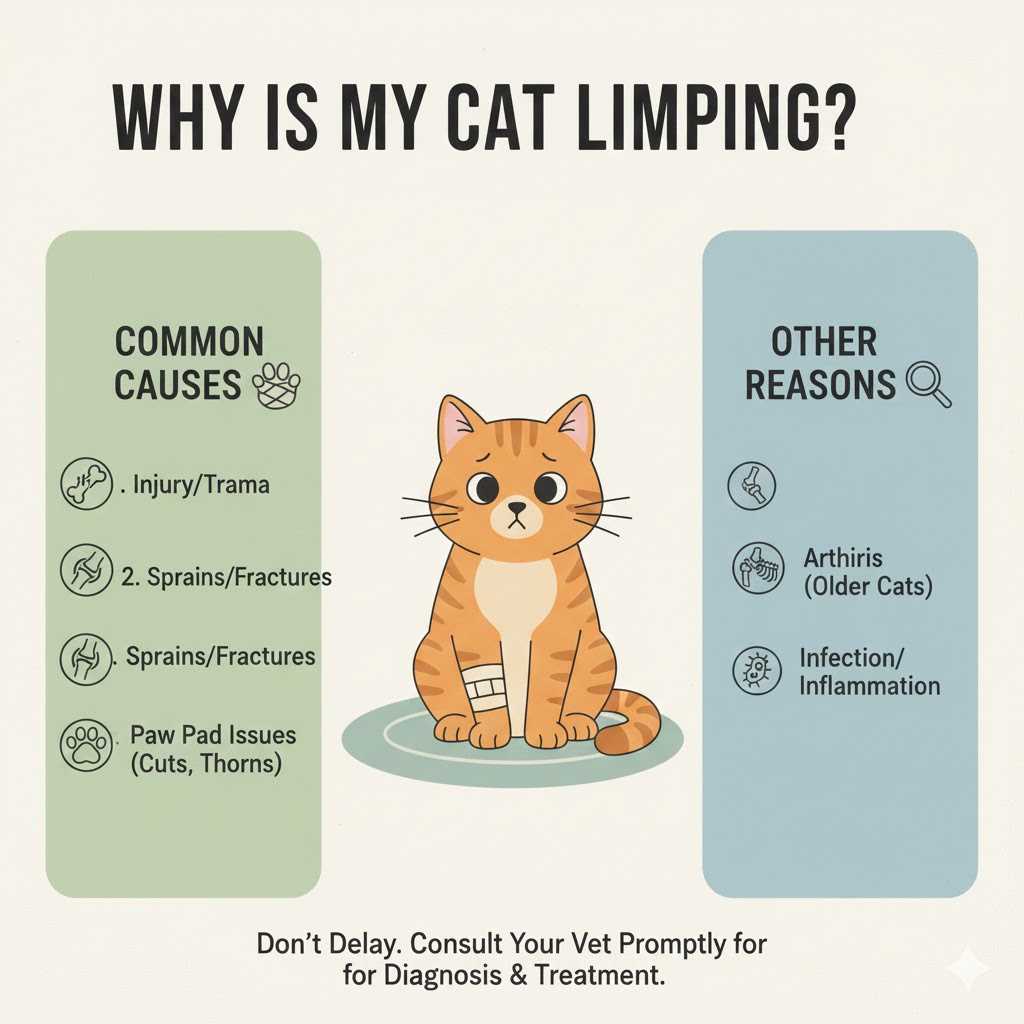
Below are the most common reasons your cat may be limping.
1. Injury From Jumping or Falling
Cats can injure themselves by:
- Jumping from high places
- Slipping on floors
- Landing awkwardly
- Rough play with other animals
This may cause sprains, strains, or bruising that leads to limping.
2. Paw Problems (Very Common)
Cats often limp because something is wrong with their paw. Common causes include:
- Thorns or splinters
- Cuts or wounds
- Broken nails
- Burns from hot surfaces
- Sticky substances stuck between toes
Always check the paws gently for debris.
3. Arthritis or Joint Pain
Older cats often limp due to joint inflammation.
Signs include:
- Stiffness after sleeping
- Hesitation to jump
- Slow movement
- Trouble climbing stairs
Arthritis can also affect younger cats after injury.
4. Bite Wounds or Abscesses
Outdoor cats or multi-cat households may have fights.
A bite can develop into a painful abscess within 24–48 hours.
Symptoms:
- Swelling
- Warm lump
- Sensitivity
- Sudden limp
This needs vet care.
5. Fractures or Muscle Injuries
If your cat:
- Was hit by something
- Fell from a height
- Got caught somewhere
A fracture or muscle tear is possible. Limping will be severe, and your cat may avoid putting weight on the leg.
6. Ingrown or Broken Claw
Claws that grow inward or break can be extremely painful.
You may notice:
- Bleeding
- Overgrown nail
- Licking the paw
- Sudden limp after scratching or climbing
7. Leg or Hip Problems (Genetic)
Some cats have inherited issues such as:
- Hip dysplasia
- Knee dislocation (patellar luxation)
These conditions may cause intermittent or ongoing limping.
8. Infections or Inflammation
Certain bacterial or viral infections can affect the:
- Joints
- Bones
- Muscles
This may lead to stiffness or limping.
When Should You See a Vet?
Seek veterinary help immediately if your cat shows:
- Extreme pain
- Swelling or hot areas
- Bleeding
- No weight-bearing on the leg
- Sudden inability to walk
- Lethargy or fever
Also visit a vet if the limp lasts more than 24 hours even if mild.
What You Can Do at Home (Safe Steps)
✔ Check the paws
Look for objects, cuts, or swelling.
✔ Keep your cat indoors
Prevent further injury.
✔ Restrict jumping and running
Provide soft resting spots.
✔ Apply a warm compress
Only if there is no swelling or open wound.
✔ Avoid human painkillers
They can be toxic to cats.
What NOT to Do
- Do not forcefully touch or squeeze the leg
- Do not try to set a bone yourself
- Do not give human medications
- Do not wait too long if limping worsens
Read Also : Why Does My Cat Follow Me Everywhere
FAQs
1. Why is my cat suddenly limping but acting normal?
Likely a minor injury, paw irritation, or sprain — but still monitor closely.
2. Can a limping cat heal on its own?
Mild sprains can heal, but hidden injuries or infections may get worse without treatment.
3. Why is my cat limping after jumping?
A strained muscle or soft tissue injury is common. Rest the cat and observe for 24 hours.
4. Why is my cat limping but not crying?
Cats hide pain instinctively. Limping itself is a sign of discomfort.
Conclusion
A limping cat may be dealing with anything from a minor paw injury to something more serious like an infection or fracture. Always examine the paw, monitor your cat closely, and seek veterinary help if symptoms don’t improve quickly.
