
Whether you’re preparing your cat for travel, a move, or an important procedure, a health certificate is often required. This simple document confirms that your cat is healthy, properly vaccinated, and safe to transport.
But how much does a health certificate for a cat actually cost?
Why does the price vary?
And what should you expect during the process?
This complete guide explains everything in a clear, helpful, and easy-to-understand way so you can make confident decisions for your cat.
What Is a Health Certificate for a Cat?
A health certificate (sometimes called a “certificate of veterinary inspection”) is an official form completed by a licensed veterinarian. It verifies that your cat:
- Is healthy and free from contagious diseases
- Has no signs of illness
- Is fit for travel
- Has up-to-date vaccinations
- Meets the requirements set by the airline, carrier, or organization requesting the certificate
This document is usually signed after a physical exam and sometimes after reviewing medical records.
Why Do Cats Need a Health Certificate?
You may need a health certificate for several reasons, including:
● Travel
Airlines, train companies, and some transportation services require a recent health certificate to ensure animals traveling with them are healthy.
● Adoption or Rehoming
Some shelters, rescues, and adoption programs require proof of good health.
● Boarding or Grooming
Certain boarding facilities, pet hotels, or groomers ask for a health certificate or updated medical proof to protect all pets under their care.
● Moving to a New Home
Occasionally, landlords, housing communities, or pet-friendly accommodations ask for health verification.
● Medical Procedures
Some vets require updated health documentation before performing surgeries or specialized treatments.
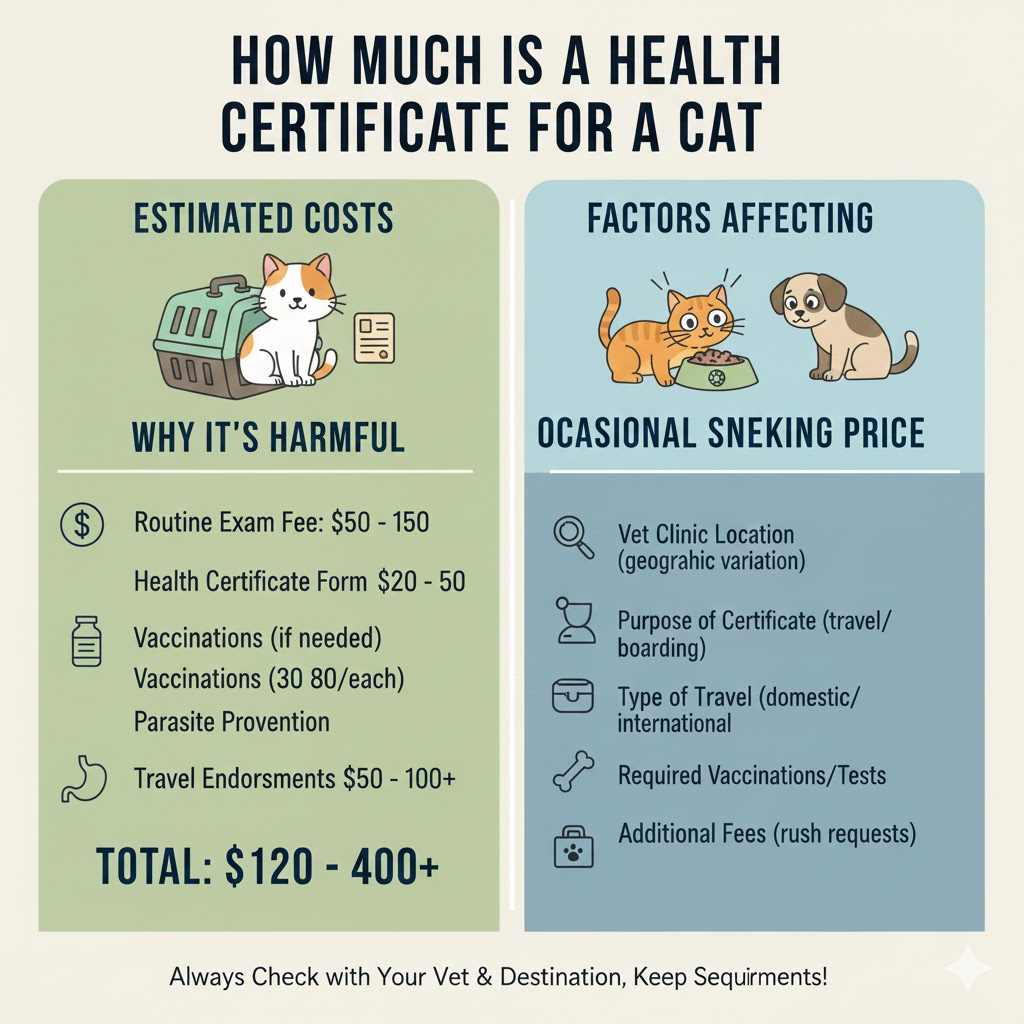
How Much Does a Health Certificate for a Cat Cost?
The cost of a cat health certificate can vary widely depending on several factors. Instead of giving fixed numbers, the safest approach is to explain why the price differs, since veterinary fees, clinic policies, and exam requirements are not the same everywhere.
Factors That Influence the Cost:
1. Type of Certificate Needed
Different situations require different types of certificates:
● Basic Health Certificate
Includes a general physical exam and confirmation your cat is healthy.
● Travel Health Certificate
May involve:
- Travel-specific forms
- Extra documentation
- Additional vaccinations
- Microchip verification
- Parasite treatments
More requirements = higher cost.
2. Exam Requirements
Some health certificates only require a general physical check.
Others may need:
- Updated rabies vaccination
- FVRCP vaccination status
- Microchip verification
- Parasite check
- Blood tests
Every additional test or procedure adds to the total cost.
3. Your Cat’s Medical History
If your cat:
- Has existing health issues
- Needs new or updated vaccines
- Has never been microchipped
- Has not seen a vet recently
…the vet may need to perform more steps before approving the certificate.
4. Clinic Type
Different veterinary clinics offer different pricing structures:
- Private veterinary clinics
- Emergency animal hospitals
- Mobile veterinary services
- High-demand urban clinics
- Low-cost community clinics
General rule:
Basic clinics usually charge less, specialty clinics may charge more.
5. Additional Services During the Visit
Sometimes, vets recommend additional services while preparing the certificate, such as:
- Flea or tick treatment
- Deworming
- Vaccination boosters
- Nail trimming
- Microchip placement
- Health screenings
These are optional unless required by the destination or organization.
What Happens During the Health Certificate Exam?
A typical health certificate exam includes:
1. Complete Physical Exam
The vet checks:
- Eyes
- Ears
- Teeth
- Skin and coat
- Respiratory health
- Heart and circulation
- Body temperature
- Lymph nodes
- Muscles and joints
- Hydration level
2. Review of Vaccination Records
The vet confirms:
- Rabies vaccination status
- FVRCP vaccine status
- Any additional required vaccines
If vaccinations are overdue, they may recommend updating them before issuing the certificate.
3. Weight and Behavior Check
Your cat’s weight is recorded, and the vet checks for:
- Stress
- Anxiety
- Signs of illness
- Abnormal behavior
4. Parasite Check
Depending on requirements, the vet may check for:
- Fleas
- Ticks
- Ear mites
- Intestinal parasites
5. Documentation Review
The vet fills out and signs the official health certificate form, including:
- Your cat’s details
- Microchip number (if applicable)
- Vaccination dates
- Exam date
- Health status
- Travel or boarding requirements
How Long Is a Health Certificate Valid?
Most health certificates are valid for a short period, often:
- Only for the exact date of the exam
- Or for a limited number of days afterward
This is because health conditions can change quickly.
Always check the validity period required by:
- Airlines
- Boarding facilities
- Adoption organizations
- Anyone requesting the document
When Should You Get a Health Certificate for Your Cat?
Timing is important.
Because the certificate is only valid for a short duration, getting it too early can make it expire before you need it.
But getting it too late may cause stress or delays.
Best approach:
Schedule the exam close to the date it’s needed, but give yourself enough time for extra tests or vaccinations if required.
Tips to Save Money on a Cat Health Certificate
While you cannot avoid the necessary exam, you can reduce unnecessary expenses.
● Keep your cat’s vaccinations up to date
This avoids last-minute booster shots.
● Bring all previous medical records
Saves time and prevents duplicate tests.
● Ask if telehealth pre-consults are available
Some clinics can review your documents first to reduce in-person time.
● Compare veterinary clinics
Some clinics offer more affordable routine exams.
● Avoid last-minute appointments
Urgent bookings may cost more.
Do You Need a Health Certificate if Your Cat Is Not Traveling?
In many situations, no, you do not need one.
However, you may need a certificate if:
- A new boarding facility asks for it
- A groomer requires proof of good health
- A landlord or housing community requests verification
- An adoption or rental agency needs documentation
Can You Get a Digital Copy?
Many veterinarians now offer electronic copies of health certificates.
This can be convenient for:
- Uploading documents
- Emailing them
- Keeping backups
However, some organizations may still require a physical signed copy, so always check beforehand.
What if Your Cat Fails the Health Certificate Exam?
If your cat shows signs of illness during the exam, the vet may:
- Delay the certificate
- Recommend treatment
- Suggest further testing
- Update vaccinations after recovery
This is for your cat’s safety and comfort, especially if travel is involved.
Is Pet Insurance Helpful for This Process?
A health certificate itself is usually not covered by insurance.
However, insurance may help with:
- Vaccinations
- Illness-related treatments
- Diagnostic tests
If your cat is generally healthy, these extra expenses are usually minimal, but insurance can be helpful for cats with ongoing medical needs.
Read Also : Is Cat Food Bad for Dogs
Conclusion
A health certificate for your cat is a simple document that confirms good health, proper vaccinations, and readiness for travel or other requirements. While the cost can vary, the final price depends on the type of exam, the clinic, and any additional procedures your cat may need.
By keeping medical records updated and preparing ahead of time, you can make the process smooth, quick, and stress-free — for both you and your cat.
FAQs
1. How long does it take to get a health certificate for a cat?
Most certificates are issued on the same day of the exam, unless additional tests or treatments are needed.
2. Can any vet issue a health certificate?
Only licensed veterinarians can issue them.
3. Do kittens need a health certificate?
Yes, if they meet the requirements for the situation (travel, boarding, adoption).
4. Can I use the same certificate multiple times?
Usually no. Most certificates are valid for a short period.
5. Does my indoor cat need one?
Only if required by a facility, airline, organization, or program.
