
If your cat has suddenly turned into a nonstop chatterbox, you’re not alone. From soft chirps to loud, persistent cries, excessive meowing can leave any cat owner confused — and sometimes a little overwhelmed. While cats naturally communicate with vocal sounds, nonstop meowing usually means something specific.
This guide explains why your cat won’t stop meowing, the most common triggers, and practical ways to calm the behavior without stress for you or your pet.
Why Do Cats Meow So Much? Understanding Their Behavior
Cats don’t meow at other cats as much as they do at humans. Meowing is their language for us — a way to express needs, discomfort, confusion, or emotions.
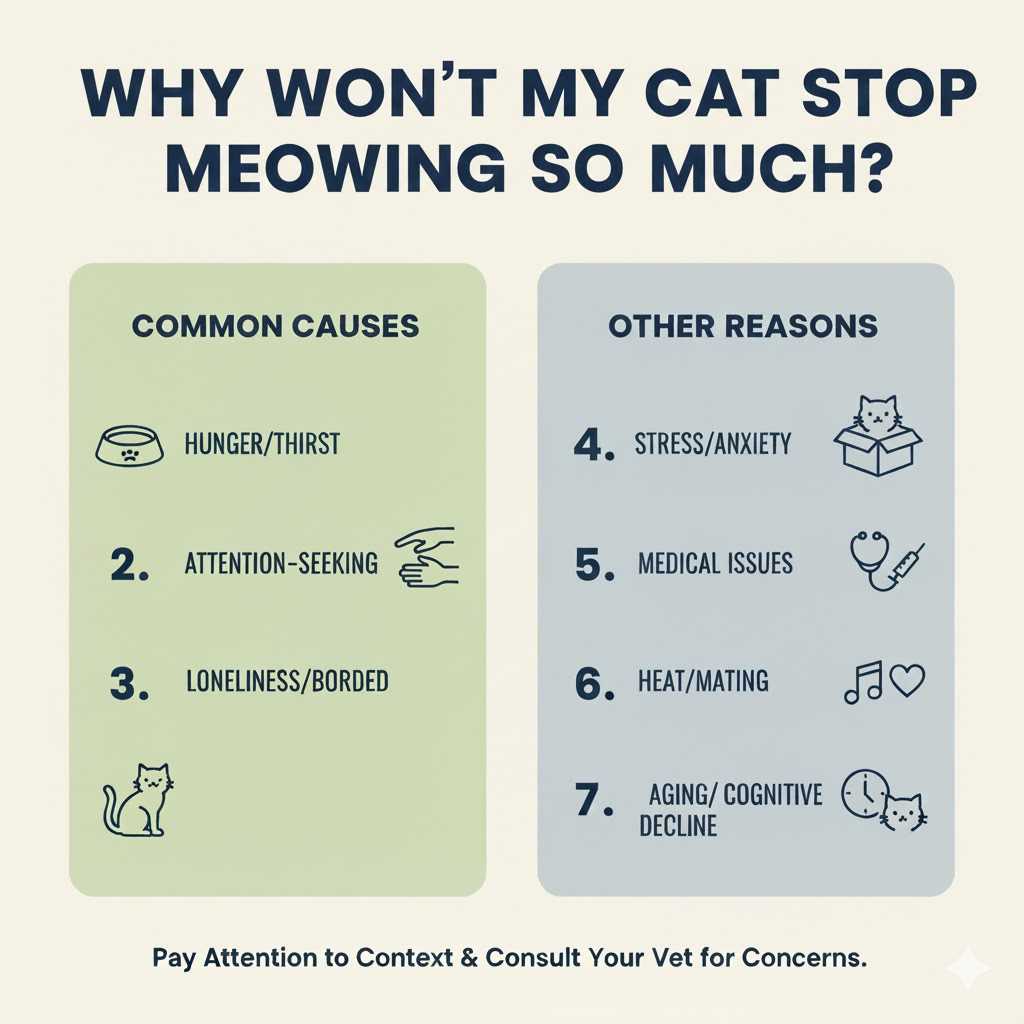
When the meowing becomes frequent, repetitive, or intense, it’s typically a sign of one of these:
- A need (food, attention, comfort)
- A physical problem
- A behavioral issue
- Stress or environmental change
- Age-related cognitive changes
Let’s break down the most common reasons.
Common Reasons Your Cat Won’t Stop Meowing
1. Your Cat Wants Attention
Cats learn quickly that meowing gets results. Even if you respond once — they remember.
Signs it’s attention-seeking:
- Meowing increases when you’re working, relaxing, or not looking at them.
- Meows stop immediately when you pet or play with them.
- They follow you around while vocalizing.
Solution:
Schedule 10–15 minutes of dedicated play twice a day. Use toys that mimic natural prey movement. Increase affection if your cat enjoys physical contact.
2. Your Cat Is Hungry or Wants Treats
Cats are smart. If they meow and you refill their bowl, they’ll repeat the behavior.
Other signs:
- Meowing around feeding times
- Gathering where food is stored
- Rubbing against legs with louder cries
Solution:
Use a feeding schedule. Consider timed feeders for consistency.
3. Stress or Anxiety
Anything that changes your cat’s normal routine can trigger excessive meowing.
Possible triggers:
- New pet or person in the home
- Moving furniture or relocating the litter box
- Loud sounds, construction, or unfamiliar visitors
- Travel or changes in your schedule
Solution:
Create safe, quiet spaces. Use enrichment (scratching posts, perches, hiding spots). Maintain routine.
4. Loneliness or Boredom
Cats that are under-stimulated often vocalize more.
Common signs:
- Meowing when you leave or arrive
- High activity at night
- Knocking things off counters for attention
Solution:
Add toys, window perches, puzzle feeders, and interactive play sessions.
5. Medical Problems
Cats often vocalize when something feels wrong. This is a serious possibility — especially if the behavior is new.
Possible health-related causes:
- Pain or discomfort
- Hyperthyroidism
- Kidney issues
- High blood pressure
- Dental pain
- Vision or hearing changes
Watch for:
- Weight changes
- Excessive thirst
- Lethargy
- Vomiting
- Hiding or acting differently
Solution:
A vet check is important when meowing appears suddenly or is accompanied by other symptoms.
6. Aging and Cognitive Decline
Senior cats sometimes develop confusion or disorientation.
Symptoms may include:
- Loud crying at night
- Walking around aimlessly
- Staring at walls
- Forgetting familiar routines
Solution:
Provide night lights, predictable schedules, and soothing environments.
7. Your Cat Is in Heat (Unspayed Females)
Cats in heat meow loudly — often nonstop.
Signs:
- Rolling on the floor
- Rubbing against furniture
- Trying to escape outside
- Loud, drawn-out cries
Solution:
Spaying stops heat cycles permanently.
8. Territorial Behavior
If your cat sees other cats outside or smells unfamiliar animals inside, they may vocalize to assert their territory.
Solution:
Block outside views temporarily, use curtains, or provide enrichment indoors.
What to Do When Your Cat Won’t Stop Meowing
Here’s how to calm the vocal behavior safely and effectively.
1. Identify the Trigger First
Observe when the meowing happens:
- Before meals?
- Only at night?
- When you leave?
- When they see another animal?
This gives clues to the root cause.
2. Do Not Reward Excessive Meowing
Even negative attention — talking, yelling, reacting — encourages the behavior.
Instead:
- Reward quiet moments
- Walk away when they are meowing for unnecessary reasons
- Reinforce calm behavior with treats or affection
3. Improve Their Environment
A bored cat = a loud cat.
Enhance enrichment with:
- Climbing trees
- Window perches
- Cat tunnels
- Rotate new toys
- Interactive play multiple times daily
4. Check the Basics
Ensure:
- Litter box is clean
- Food bowl is filled according to schedule
- Water is fresh
- Room temperature is comfortable
Cats are sensitive to small changes.
5. Consider Night-Time Solutions
If your cat meows at night:
- Provide a late-evening play session
- Offer a small snack before bed
- Use soft lighting
- Offer warm bedding
Night meowing is often linked to energy or loneliness.
6. Use Calming Tools
Helpful options:
- Calming pheromone sprays
- Comfort blankets
- Soothing music for pets
- Routine-based feeding and play
7. Visit a Veterinarian if Needed
If meowing suddenly increases, or your cat shows pain, weight changes, or unusual behavior, a check-up is important.
When Excessive Meowing Is Normal
Some breeds are naturally more talkative, such as:
- Siamese
- Oriental Shorthair
- Bengal
- Burmese
If your cat belongs to a vocal breed, some level of talkativeness is simply part of their personality.
How to Prevent Future Excessive Meowing
- Maintain a predictable routine
- Offer daily physical and mental stimulation
- Keep regular vet check-ups
- Avoid reinforcing unwanted meowing
- Ensure a calm, safe environment
Consistency builds confidence, which reduces vocal behavior.
Read Also : How to Give a Cat a Pill
FAQs
Why is my cat suddenly meowing nonstop?
Sudden change usually indicates stress, discomfort, pain, or a new need. Observe behavior, check basic necessities, and consider a vet visit if it continues.
Is it normal for cats to meow at night?
Yes — especially if they have excess energy or feel lonely. Extra play before bedtime often helps.
How do I know if my cat’s meowing is serious?
If the meowing is new, sounds painful, or is accompanied by appetite or behavior changes, get a vet check.
Can I train my cat to meow less?
Yes. Avoid reinforcing unnecessary meowing and reward calm, quiet behavior.
Conclusion
If your cat won’t stop meowing, they’re not trying to annoy you — they’re trying to communicate. Whether it’s hunger, boredom, stress, or a medical issue, understanding the reason behind the vocal behavior helps you respond correctly.
With patience, observation, and the right strategies, you can reduce excessive meowing and create a more peaceful home for both you and your feline companion.
