
Bringing a kitten home is exciting, but litter training can feel intimidating at first. The good news is that most kittens learn quickly when given the right setup and guidance. Understanding how to litter train a kitten properly helps prevent accidents and builds good habits early.
This guide walks you through everything—from choosing the right litter box to fixing common problems—so litter training feels easy, not frustrating.
Why Litter Training Is Important
Litter training keeps your home clean and helps your kitten feel secure.
Proper training:
- Encourages natural instincts
- Reduces stress for your kitten
- Prevents unwanted habits
- Builds trust between you and your kitten
Starting early makes the process smoother.
When Should You Start Litter Training a Kitten?
Most kittens can begin litter training as soon as they arrive home.
Kittens usually:
- Learn by watching
- Respond quickly to routine
- Prefer clean, accessible areas
You don’t need to wait—gentle guidance works from the start.
Choosing the Right Litter Box
The litter box setup plays a huge role in success.
Size and Shape Matter
A good litter box should:
- Be low enough to step into
- Allow the kitten to turn around
- Feel open and non-threatening
Avoid covered boxes at first.
How Many Litter Boxes Do You Need?
A simple rule:
- One box per kitten
This prevents confusion and competition.
Picking the Right Litter
The texture of litter matters to kittens.
Most kittens prefer:
- Soft, fine-grained litter
- Unscented options
- Familiar textures
Strong scents can discourage use.
Where to Place the Litter Box
Location affects whether your kitten uses the box.
Place the box:
- In a quiet area
- Away from food and water
- Easy to access
Avoid high-traffic or noisy spaces.
How to Litter Train a Kitten Step by Step
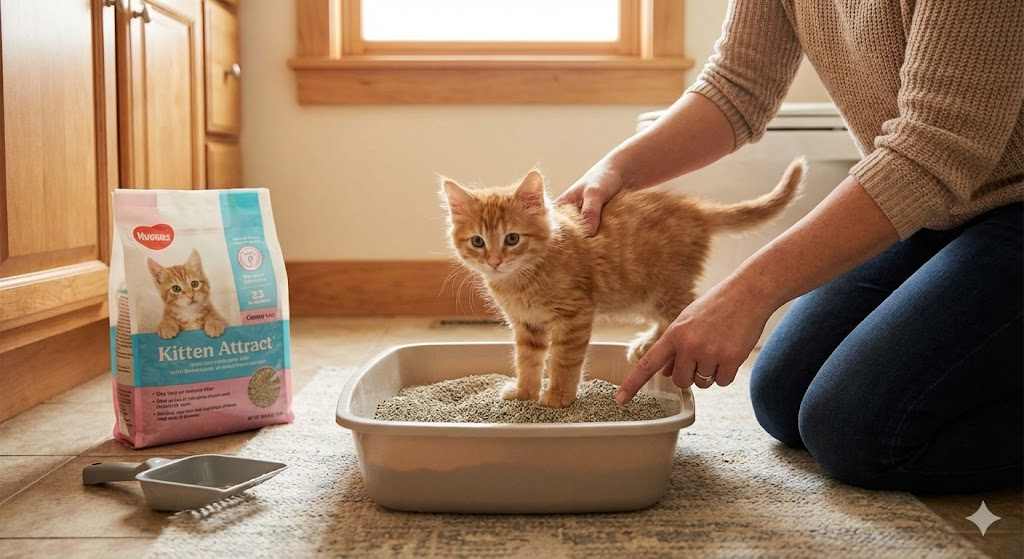
Step 1: Show the Litter Box
Gently place your kitten in the box after:
- Waking up
- Eating
- Playing
Let them explore without pressure.
Step 2: Let Natural Instincts Take Over
Most kittens instinctively:
- Sniff the litter
- Dig lightly
- Understand its purpose
Avoid forcing movements.
Step 3: Praise Good Behavior
Positive reinforcement works best.
Use:
- Gentle praise
- Calm tone
- Light affection
Avoid punishment completely.
What to Do If Your Kitten Has an Accident
Accidents are normal.
If it happens:
- Clean the area thoroughly
- Avoid scolding
- Place the kitten back in the box
Consistency matters more than correction.
How to Clean Accidents Properly
Cleaning prevents repeat accidents.
Use:
- Mild cleaners
- Odor-removing solutions
- No harsh smells
Cats may return to areas that smell familiar.
Common Litter Training Mistakes to Avoid
Avoid these errors:
- Changing litter too often
- Moving the box frequently
- Using strong-scented litter
- Punishing your kitten
Small mistakes can slow progress.
Why a Kitten Refuses the Litter Box
Refusal usually has a reason.
Common causes:
- Dirty box
- Uncomfortable litter
- Stress or fear
- Poor location
Fixing the cause solves the problem.
How Often Should You Clean the Litter Box?
Cleanliness encourages good habits.
Recommended routine:
- Scoop daily
- Change litter regularly
- Wash the box occasionally
Cats prefer a clean bathroom.
Should You Use Litter Training Aids?
Most kittens don’t need extra help.
However, aids can:
- Encourage interest
- Reinforce routine
Use only gentle, non-overwhelming options.
Litter Training Multiple Kittens
If training more than one kitten:
- Provide separate boxes
- Avoid crowding
- Watch for dominance behavior
Each kitten needs equal access.
How Long Does Litter Training Take?
Most kittens learn quickly.
Typical timeline:
- A few days to a week
- Occasional accidents early on
Patience speeds learning.
Transitioning to a Different Litter Later
Change litter gradually.
Steps:
- Mix old and new litter
- Increase new litter slowly
- Watch for reactions
Sudden changes can confuse kittens.
Signs Your Kitten Is Successfully Litter Trained
Look for:
- Consistent box use
- No accidents
- Confident digging and covering
Once habits form, maintenance is easy.
When to Seek Help
If problems continue:
- Review setup
- Reduce stress
- Observe behavior patterns
Persistent issues may need extra attention.
Read Also : How to Travel With a Cat
Frequently Asked Questions
Do kittens naturally know how to use a litter box?
Most kittens have strong instincts that guide them.
Can I move the litter box later?
Yes, but do it gradually to avoid confusion.
What if my kitten plays in the litter?
This is normal and usually stops with time.
Should I punish accidents?
No. Punishment increases fear and confusion.
Is it okay to carry my kitten to the box?
Yes, as long as it’s gentle and calm.
Conclusion
Learning how to litter train a kitten doesn’t have to be stressful. With the right setup, patience, and positive reinforcement, most kittens pick it up quickly.
By respecting your kitten’s instincts and keeping their environment clean and calm, you’ll build healthy habits that last a lifetime—and enjoy a cleaner, happier home together.
