
Living with a cat brings comfort, companionship, and joy—but it also comes with responsibilities. One concern many people quietly worry about is hygiene, especially when dealing with litter boxes or accidents. This leads to a common and important question: is cat urine toxic to humans?
The short answer is that cat urine itself is not poisonous in the traditional sense, but under certain conditions, exposure can affect human health. Understanding when it’s harmless and when it becomes a concern helps you protect yourself and your household without unnecessary fear.
This article explains everything clearly, calmly, and practically.
What Is Cat Urine Made Of?
Cat urine is a natural waste product made up of:
- Water
- Urea
- Uric acid
- Ammonia (forms over time)
- Minerals and waste chemicals
Fresh cat urine is usually mild in smell. Problems arise when urine sits for long periods or accumulates in enclosed spaces.
Is Cat Urine Toxic to Humans?
Cat urine is not directly toxic to healthy humans in normal household conditions. Touching or smelling small amounts briefly does not cause poisoning.
However, long-term exposure, poor ventilation, or contact with contaminated surfaces can lead to health issues—especially for certain individuals.
How Cat Urine Can Affect Human Health
1. Ammonia Fumes
As cat urine breaks down, it releases ammonia.
High ammonia exposure may cause:
- Eye irritation
- Throat discomfort
- Coughing
- Headaches
- Breathing irritation
This is more likely in poorly ventilated areas or homes with strong urine odor.
2. Respiratory Sensitivity
People with sensitive airways may react more strongly.
Those at higher risk include:
- Individuals with asthma
- People with allergies
- Young children
- Older adults
Strong odors can irritate lungs even without direct contact.
3. Bacterial Exposure
Cat urine itself is usually sterile when fresh, but surfaces contaminated with urine can grow bacteria.
Potential issues include:
- Skin irritation
- Minor infections if wounds are exposed
- Increased risk if hygiene is poor
Proper cleaning greatly reduces this risk.
4. Parasite Concerns
While parasites are more commonly linked to feces, contaminated litter areas can still pose risks if hygiene is neglected.
This is why:
- Handwashing is important
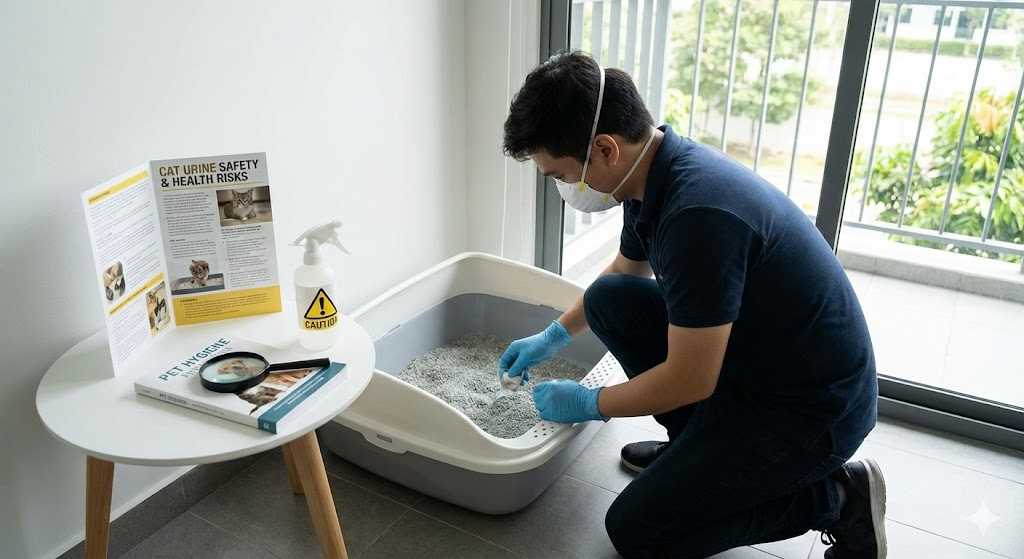
- Gloves are recommended for cleaning
- Litter boxes should be maintained daily
Can Breathing Cat Urine Smell Be Harmful?
Occasional exposure to mild odors is not dangerous. However, strong, persistent smells may indicate high ammonia levels.
Long-term exposure may:
- Irritate nasal passages
- Trigger headaches
- Worsen breathing conditions
The smell itself is often a warning sign that cleaning or ventilation is needed.
Is Cat Urine Dangerous on Skin?
Brief skin contact with cat urine is generally not harmful.
However:
- Prolonged contact can cause irritation
- Broken skin increases risk of infection
- Sensitive skin may react more easily
Always wash exposed skin promptly.
Is Cat Urine Harmful to Children?
Children are more vulnerable because:
- They play on floors
- They touch surfaces frequently
- Their immune systems are still developing
This makes cleanliness especially important in homes with kids.
Can Cat Urine Affect Pregnant Individuals?
While cat urine itself is not the main concern, overall litter box hygiene matters.
Basic precautions include:
- Avoiding direct handling if possible
- Washing hands thoroughly
- Keeping litter areas clean
Good hygiene minimizes any potential risks.
Is Cat Urine More Dangerous in Enclosed Spaces?
Yes. Enclosed or poorly ventilated areas increase risk.
Examples include:
- Basements
- Small rooms
- Closed bathrooms
Odors build faster and ammonia concentration increases without airflow.
Signs Cat Urine Exposure May Be a Problem
Watch for:
- Persistent strong odor
- Eye or throat irritation
- Breathing discomfort
- Frequent headaches indoors
These signs usually point to environmental buildup, not poisoning.
How to Safely Clean Cat Urine
Proper cleaning prevents health issues.
Steps:
- Absorb fresh urine quickly
- Clean with mild cleaners
- Use odor-neutralizing solutions
- Ventilate the area well
Avoid mixing cleaning chemicals together.
How Often Should Litter Boxes Be Cleaned?
Regular maintenance keeps exposure minimal.
Recommended routine:
- Scoop daily
- Replace litter regularly
- Wash the box occasionally
Clean boxes reduce odor and health concerns.
How to Reduce Health Risks from Cat Urine
Simple habits make a big difference.
Best practices:
- Keep litter boxes clean
- Ventilate rooms
- Wash hands after cleaning
- Address accidents quickly
- Use gloves when needed
These steps keep your home safe and comfortable.
When Cat Urine Odor Signals a Bigger Issue
Strong or frequent urine odor may indicate:
- Litter box aversion
- Medical issues in your cat
- Stress-related behavior
Addressing the root cause benefits both you and your cat.
Common Myths About Cat Urine
Let’s clear up misunderstandings.
- Myth: Cat urine is poisonous
Truth: It’s not poisonous but can irritate if neglected - Myth: Smell alone causes disease
Truth: Smell signals buildup, not illness - Myth: All exposure is dangerous
Truth: Normal household exposure is manageable
Who Should Be Extra Careful?
Extra caution is helpful for:
- People with breathing conditions
- Individuals with weakened immunity
- Households with infants
Cleanliness and airflow are key.
Read Also : Why Does My Cat Lick Me
Frequently Asked Questions
Is cat urine toxic to humans if inhaled?
Inhaling strong fumes over time may irritate airways, but brief exposure is not toxic.
Can cat urine cause long-term health problems?
Not usually, unless exposure is heavy and prolonged.
Is dried cat urine more harmful than fresh?
Yes, dried urine releases stronger ammonia odors.
Can cleaning cat urine make me sick?
Not if done properly with ventilation and hygiene.
Does cat urine spread disease easily?
No, proper cleaning prevents health risks.
Conclusion
So, is cat urine toxic to humans? In normal household situations, the answer is no. Cat urine is not poisonous, but poor hygiene and long-term exposure to strong odors can affect comfort and health.
By keeping litter areas clean, ventilating your home, and practicing basic hygiene, you can safely live with cats without worry. Awareness—not fear—is the key to a healthy, happy environment for both you and your cat.
