
Cats are curious by nature. They sniff, chew, and explore their surroundings—sometimes in ways that put them at risk. One of the most common dangers inside homes and gardens is toxic plants. Even a small bite of the wrong leaf can cause serious health problems for a cat.
If you’re searching for what to do if a cat eats a toxic plant, you’re already taking the right step. Acting quickly and correctly can make a huge difference in your cat’s recovery.
This guide explains exactly what to do, what symptoms to watch for, what mistakes to avoid, and how to prevent plant poisoning in the future—using clear, practical information any cat owner can follow.
Why Toxic Plants Are Dangerous for Cats
Cats’ bodies process substances very differently than humans or dogs. Many plants contain chemicals that a cat’s system cannot break down safely.
Toxic plants can affect:
- The digestive system
- The nervous system
- The liver and kidneys
- The heart
- The mouth and throat
Some plants cause immediate reactions, while others create damage slowly over time.
Common Signs a Cat May Have Eaten a Toxic Plant
Symptoms vary depending on the plant and the amount consumed, but even mild signs should be taken seriously.
Watch for:
- Drooling or foaming at the mouth
- Vomiting or retching
- Diarrhea
- Pawing at the mouth
- Difficulty swallowing
- Lethargy or weakness
- Trembling or shaking
- Loss of balance
- Refusal to eat
- Hiding behavior
Some cats show symptoms within minutes, while others take hours.
First Step: Stay Calm and Act Quickly
Panic can lead to dangerous mistakes. Stay calm so you can think clearly and help your cat effectively.
Your goal is to:
- Stop further exposure
- Assess your cat’s condition
- Take safe, immediate action
Remove the Plant Immediately
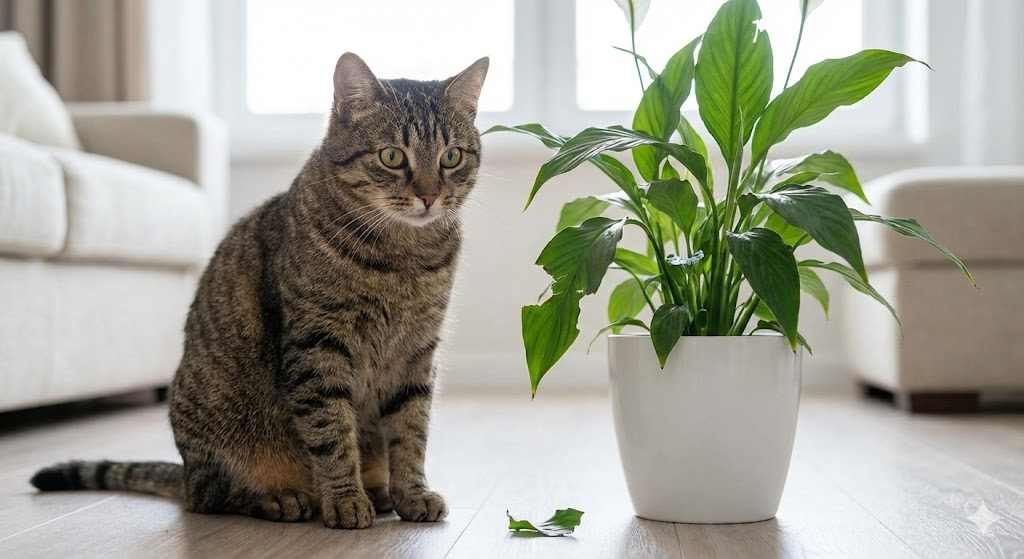
If you see your cat chewing a plant:
- Take the plant away right away
- Move your cat to a safe area
- Remove fallen leaves from the floor
Preventing more ingestion is critical.
Check Your Cat’s Mouth and Face
Some plants irritate the mouth and tongue.
- Look for redness, swelling, or sores
- If plant residue is visible, gently remove it with a damp cloth
- Do not scrub or force anything
If your cat resists, stop to avoid injury.
Do NOT Make Your Cat Vomit
Never try to induce vomiting unless a professional specifically instructs you to.
Forcing vomiting can:
- Cause choking
- Damage the throat
- Increase toxin exposure
This is one of the most dangerous mistakes cat owners make.
Do NOT Give Home Remedies
Avoid giving:
- Milk
- Oils
- Salt water
- Human medications
- Activated charcoal without guidance
These remedies often do more harm than good.
Identify the Plant If Possible
Knowing what plant your cat ate is extremely helpful.
Try to:
- Take a photo of the plant
- Keep a leaf sample
- Note where the plant came from
Even partial identification helps determine risk.
Observe Your Cat Closely
Watch your cat for any changes.
Pay attention to:
- Breathing
- Energy level
- Appetite
- Behavior
Symptoms may appear gradually.
When to Seek Immediate Help
You should seek help right away if:
- Your cat shows symptoms
- The plant is known to be toxic
- You are unsure what plant was eaten
- A large amount may have been consumed
Waiting can allow toxins to cause internal damage.
Why Speed Matters With Plant Poisoning
Some plant toxins:
- Act rapidly
- Damage organs silently
- Become harder to treat over time
Early action can significantly improve outcomes.
What Happens After a Cat Eats a Toxic Plant
Effects depend on the plant and exposure level.
Possible impacts include:
- Digestive irritation
- Mouth and throat burns
- Nervous system symptoms
- Liver or kidney stress
- Heart rhythm changes
Some plants cause delayed reactions, making monitoring essential.
Should You Give Food or Water?
Do not force food or water.
In some cases:
- Food increases toxin absorption
- Water triggers vomiting
Only offer food or water if advised.
What If the Plant Was Only Touched or Licked?
Some toxins transfer through:
- Sap
- Pollen
- Plant oils
If exposure was external:
- Prevent grooming
- Gently wipe fur if needed
- Monitor for symptoms
Cats absorb substances through skin and paws.
Common Types of Toxic Plants
While many plants are harmful, risk levels vary.
Plant toxicity may cause:
- Mild stomach upset
- Severe organ failure
- Immediate irritation
Never assume a plant is safe without confirmation.
What If Your Cat Ate a Houseplant?
Indoor plants are a frequent cause of poisoning.
If this happens:
- Remove access immediately
- Check for chewed leaves
- Monitor closely
Houseplants are often within easy reach.
What If Your Cat Ate an Outdoor Plant?
Garden plants can be just as dangerous.
Outdoor risks include:
- Decorative plants
- Wild plants
- Neighbor’s plants
Supervision outdoors reduces risk.
What NOT to Do (Very Important)
Avoid these actions:
- Waiting to “see what happens”
- Searching for random online remedies
- Giving human medications
- Ignoring mild symptoms
- Assuming small amounts are safe
These mistakes can worsen outcomes.
Aftercare and Monitoring
Even if your cat seems fine, continue monitoring.
Watch for:
- Vomiting
- Appetite changes
- Lethargy
- Behavioral changes
Some toxins cause delayed damage.
How Long Do Symptoms Take to Appear?
This depends on:
- The plant
- The amount eaten
- Your cat’s size and health
Symptoms may appear within minutes or up to 24 hours later.
How to Prevent Plant Poisoning in the Future
Choose Cat-Safe Plants
Before bringing any plant home:
- Confirm it is safe
- Avoid unknown species
Keep Plants Out of Reach
- Use hanging planters
- Place plants in closed rooms
Provide Safe Alternatives
Cats often chew plants out of curiosity.
Offer:
- Cat grass
- Interactive toys
Supervise Outdoor Time
Watch what your cat investigates outdoors.
Why Prevention Is Better Than Treatment
Preventing exposure:
- Protects your cat
- Reduces emergency situations
- Saves stress and expense
A few precautions can make a big difference.
Read Also : What to Do If Your Cat Ate Something Toxic
Frequently Asked Questions
What should I do if my cat eats a toxic plant?
Remove access immediately, observe symptoms, and seek guidance as soon as possible.
Can a small bite be dangerous?
Yes. Some plants are harmful even in tiny amounts.
Should I rinse my cat’s mouth?
Only gently and only if your cat allows it safely.
How quickly should I act?
Immediately. Time is critical.
Can cats recover from plant poisoning?
Yes, especially when action is taken early.
Conclusion
Knowing what to do if a cat eats a toxic plant can save your cat’s life. The key steps are acting quickly, preventing further exposure, avoiding harmful home remedies, and monitoring your cat closely.
Cats rely entirely on their owners for protection. By staying informed and prepared, you can respond confidently and keep your cat safe from plant-related dangers.
