
Cats may look independent, but when it comes to food safety, they rely completely on their owners. Many people assume that if a food is safe for humans, it must also be safe for cats. Unfortunately, this is not true.
If you’re searching what foods are toxic to cats, it means you care about protecting your cat from accidental harm. Some everyday foods found in kitchens can cause serious health problems in cats—even in very small amounts.
This guide explains which foods are toxic to cats, why they are dangerous, symptoms to watch for, what to do if your cat eats something harmful, and how to prevent food-related poisoning in the future.
Why Some Foods Are Dangerous for Cats
Cats have a very different digestive system than humans. Their bodies lack certain enzymes needed to break down specific compounds found in common foods.
Toxic foods can affect:
- The digestive system
- The nervous system
- The liver and kidneys
- The heart
- Blood cells
Some foods cause immediate symptoms, while others slowly damage internal organs over time.
Common Signs of Food Toxicity in Cats
Symptoms depend on the food and amount consumed, but even mild signs should never be ignored.
Watch for:
- Vomiting
- Diarrhea
- Drooling
- Lethargy
- Loss of appetite
- Trembling or shaking
- Difficulty breathing
- Unusual behavior
- Seizures
Symptoms may appear within minutes or several hours later.
Foods That Are Toxic to Cats
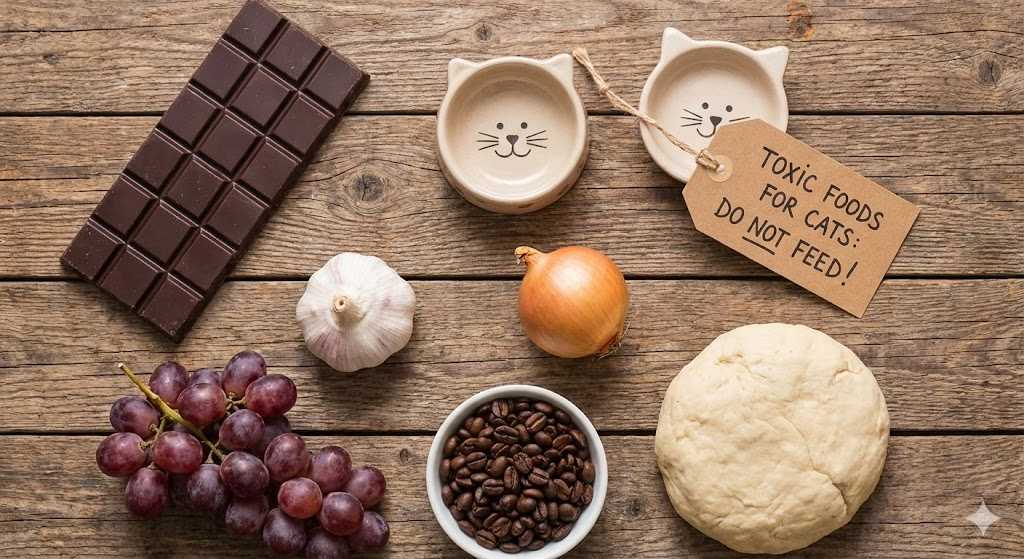
Chocolate
Chocolate contains compounds that cats cannot process safely.
Even small amounts can cause:
- Restlessness
- Rapid breathing
- Muscle tremors
- Abnormal heart rhythm
Dark chocolate and baking chocolate are especially dangerous.
Onions, Garlic, and Chives
These ingredients are extremely harmful to cats, whether raw, cooked, powdered, or dried.
They can damage red blood cells, leading to:
- Weakness
- Pale gums
- Lethargy
- Breathing problems
Repeated exposure increases the risk.
Alcohol
Alcohol is highly toxic to cats.
Even a tiny amount can cause:
- Vomiting
- Disorientation
- Slowed breathing
- Loss of coordination
Never allow cats access to alcoholic drinks or foods containing alcohol.
Grapes and Raisins
Grapes and raisins are known to cause severe reactions in cats.
Possible effects include:
- Vomiting
- Diarrhea
- Kidney stress
The exact toxic mechanism is unknown, making any amount unsafe.
Caffeine
Caffeine is found in coffee, tea, energy drinks, and some medications.
It can cause:
- Restlessness
- Rapid heart rate
- Tremors
- Overheating
Cats are far more sensitive to caffeine than humans.
Xylitol
Xylitol is a sweetener found in sugar-free gum, candy, baked goods, and some peanut butters.
Even tiny amounts may cause:
- Sudden weakness
- Digestive upset
- Serious internal reactions
Always check ingredient labels.
Raw Dough
Raw dough can expand in a cat’s stomach.
This may cause:
- Severe bloating
- Pain
- Breathing difficulty
Fermenting dough can also release alcohol.
Bones
Cooked bones can splinter easily.
They may cause:
- Choking
- Internal injuries
- Intestinal blockage
Bones are never a safe treat for cats.
Raw Eggs
Raw eggs may contain harmful bacteria and enzymes that interfere with nutrient absorption.
Potential issues include:
- Digestive upset
- Skin and coat problems
Cooked eggs in small amounts are safer if approved.
Raw Fish
Frequent raw fish consumption can lead to nutritional imbalances.
Possible problems include:
- Vitamin deficiencies
- Digestive upset
Occasional cooked fish is a safer option.
Dairy Products
Many cats are lactose intolerant.
Milk, cheese, and cream can cause:
- Diarrhea
- Gas
- Stomach discomfort
Dairy is not necessary for a cat’s diet.
Salty Foods
Foods high in salt can disrupt a cat’s fluid balance.
Excess salt may cause:
- Vomiting
- Increased thirst
- Weakness
Avoid chips, processed meats, and salty snacks.
Fatty or Fried Foods
Greasy foods are hard for cats to digest.
They can lead to:
- Vomiting
- Diarrhea
- Pancreatic stress
Table scraps are never a healthy option.
Spicy Foods
Cats are sensitive to spices and seasonings.
Spicy foods can cause:
- Mouth irritation
- Digestive upset
- Drooling
Cats do not benefit from spices.
Processed Meats
Processed meats often contain salt, preservatives, and seasonings.
These can contribute to:
- Digestive upset
- Long-term health issues
Plain, unseasoned protein is safer if approved.
What If Your Cat Eats a Toxic Food?
If your cat eats something toxic:
- Remove access to the food immediately
- Observe your cat for symptoms
- Do not induce vomiting
- Do not give home remedies
- Seek guidance as soon as possible
Quick action can reduce harm.
Why You Should Never Give Human Food Without Checking
Many foods safe for people are dangerous for cats.
Always remember:
- Cats have unique nutritional needs
- Human seasoning is often harmful
- Portion size matters
When in doubt, don’t share.
Safe Alternatives to Human Food
If you want to treat your cat, choose safer options such as:
- Cat-specific treats
- Approved cooked meats without seasoning
- Foods made specifically for cats
These options reduce risk.
Why Cats Beg for Toxic Foods
Cats may beg due to:
- Curiosity
- Smell attraction
- Learned behavior
Begging does not mean the food is safe.
How to Prevent Food Poisoning
Store Food Securely
Keep food sealed and out of reach.
Avoid Feeding From the Table
This prevents accidental exposure and bad habits.
Educate Family Members
Make sure everyone knows which foods are unsafe.
Clean Up Quickly
Cats are fast and curious when food is unattended.
Read Also : What to Do If a Cat Eats a Toxic Plant
Frequently Asked Questions
What foods are toxic to cats?
Chocolate, onions, garlic, alcohol, grapes, caffeine, xylitol, and many processed foods are toxic to cats.
Can cats eat human food safely?
Only certain foods in small, plain amounts. Many human foods are unsafe.
What should I do if my cat eats toxic food?
Remove access, observe symptoms, and seek help immediately.
Are small amounts still dangerous?
Yes. Some foods are toxic even in tiny quantities.
Can cats recover from food poisoning?
Yes, especially when action is taken early.
Conclusion
Understanding what foods are toxic to cats is essential for every cat owner. Many everyday foods can cause serious health problems, even when given accidentally or in small amounts.
By knowing which foods to avoid, watching for symptoms, and acting quickly when exposure occurs, you can protect your cat from unnecessary harm. Prevention, awareness, and responsible feeding habits are the best ways to keep your cat healthy and safe.
