
Toothpaste is something we use every day without a second thought. But what many cat owners don’t realize is that even a small amount of toothpaste can be harmful to cats. Cats may lick residue from a sink, chew on a tube, or investigate the smell — and that’s where the danger begins.
If you’re asking how much toothpaste is toxic to a cat, the answer isn’t always straightforward. The risk depends on the ingredients in the toothpaste, the amount consumed, and your cat’s size.
This guide explains why toothpaste can be dangerous, how much is considered risky, symptoms to watch for, what to do immediately, and how to prevent exposure.
Why Toothpaste Is Dangerous for Cats?
Toothpaste made for humans contains ingredients that are not safe for cats. While it helps clean human teeth, a cat’s body cannot process certain compounds properly.
The most concerning ingredients include:
- Artificial sweeteners
- Fluoride
- Foaming agents
- Flavor additives
Even a small amount can upset a cat’s system.
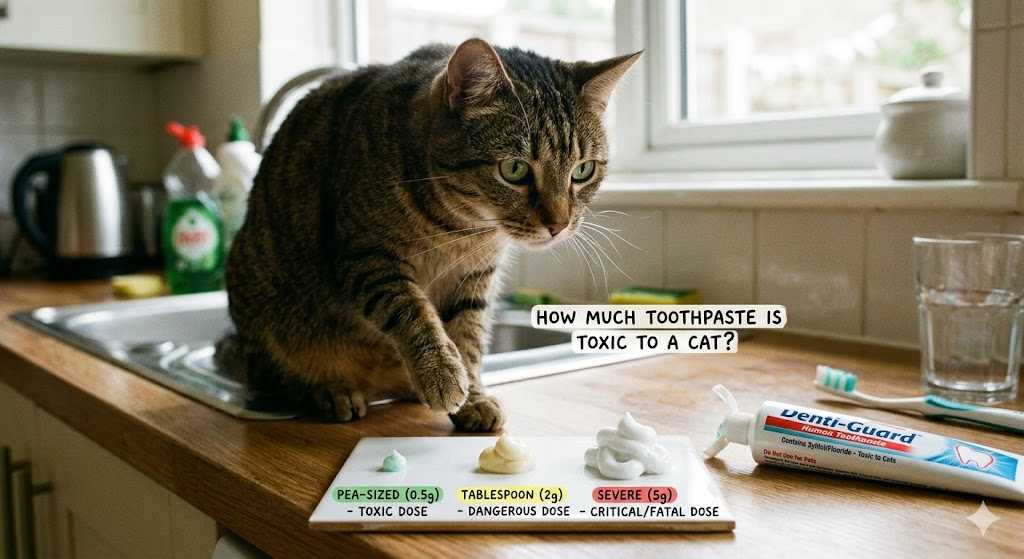
How Much Toothpaste Is Toxic to a Cat?
There is no safe amount of human toothpaste for cats.
Toxicity depends on:
- The ingredients used
- The amount ingested
- Your cat’s body weight
- Your cat’s health
Even a small lick may cause mild symptoms, while larger amounts can lead to more serious reactions.
Because cats are small, it doesn’t take much toothpaste to create a problem.
The Most Dangerous Ingredient: Xylitol
Some toothpaste contains xylitol, a sugar substitute that is highly toxic to animals.
If a toothpaste includes xylitol:
- Even tiny amounts can be dangerous
- It can affect blood sugar balance
- It may lead to serious internal reactions
Not all toothpaste contains xylitol, but when it does, the risk increases significantly.
Fluoride: Another Risk Factor
Fluoride is commonly used in toothpaste to protect human teeth, but cats are sensitive to it.
Ingesting fluoride may cause:
- Vomiting
- Drooling
- Digestive upset
- Weakness
Large amounts can lead to more severe symptoms.
What Happens When a Cat Eats Toothpaste?
Depending on the ingredients and amount, toothpaste ingestion can affect:
1. Digestive System
- Vomiting
- Diarrhea
- Stomach discomfort
2. Nervous System
- Lethargy
- Tremors
- Weakness
3. Mouth and Throat
- Irritation
- Drooling
- Pawing at the mouth
Some symptoms may appear quickly, while others develop over time.
Symptoms of Toothpaste Toxicity in Cats
Watch for the following signs:
- Drooling
- Vomiting
- Diarrhea
- Loss of appetite
- Lethargy
- Trembling
- Weakness
- Unusual behavior
If symptoms appear, action should be taken immediately.
When Is It an Emergency?
Seek urgent help if your cat shows:
- Severe vomiting
- Tremors or shaking
- Difficulty breathing
- Collapse
- Seizures
These signs indicate a serious reaction.
What to Do If Your Cat Eats Toothpaste
Step 1: Remove Access Immediately
Take the toothpaste away and prevent further licking.
Step 2: Check the Ingredients
Look at the label to see if it contains xylitol or other harmful compounds.
Step 3: Observe Your Cat
Watch for any signs of discomfort or unusual behavior.
Step 4: Seek Guidance Quickly
If you’re unsure about the amount or ingredients, it’s best to act early rather than wait.
Step 5: Do Not Try Home Remedies
Avoid giving milk, oils, or human medications.
Do not try to induce vomiting.
Why Even Small Amounts Matter
Cats are small animals with sensitive systems.
A tiny amount of toothpaste for a human may be:
- A significant dose for a cat
- Enough to trigger symptoms
This is why even minor exposure should be taken seriously.
Why Cats Are Attracted to Toothpaste
Cats may investigate toothpaste due to:
- Strong minty smell
- Curiosity
- Texture of the tube
- Residue left on sinks or brushes
Even though cats don’t crave sweet flavors, they may still lick unfamiliar substances.
Hidden Sources of Toothpaste Exposure
Toothpaste exposure doesn’t always come from direct eating.
Watch for:
- Toothbrushes left within reach
- Open toothpaste tubes
- Drops on bathroom counters
- Trash bins with used toothpaste residue
Cats are quick and curious, making these common risks.
Is Pet Toothpaste Safe?
Toothpaste made specifically for pets is designed to be safe when swallowed.
Pet-safe toothpaste:
- Does not contain harmful sweeteners
- Uses cat-friendly ingredients
- Is made for safe ingestion
Never use human toothpaste for brushing a cat’s teeth.
How to Prevent Toothpaste Poisoning
1. Store Toothpaste Safely
Keep it in closed cabinets or drawers.
2. Clean Up After Brushing
Rinse sinks and wipe surfaces to remove residue.
3. Keep Toothbrushes Out of Reach
Cats may chew on brushes with leftover toothpaste.
4. Use Only Cat-Safe Products
Always choose products designed specifically for cats.
5. Dispose of Waste Properly
Keep trash bins covered or inaccessible.
Does Body Weight Affect Toxicity?
Yes.
Smaller cats are more sensitive to even tiny amounts, while larger cats may tolerate slightly more — but no amount is considered safe.
How Quickly Do Symptoms Appear?
Symptoms may develop:
- Within minutes
- Within a few hours
In some cases, internal effects begin before visible signs appear.
Read Also : How Much Chocolate Is Toxic to a Cat
Frequently Asked Questions
Can a small lick of toothpaste harm a cat?
It may cause mild symptoms, but it should still be taken seriously.
Is fluoride-free toothpaste safe?
Not necessarily. Other ingredients may still be harmful.
Is mint flavor dangerous for cats?
Mint itself can irritate cats and may contribute to discomfort.
Can cats recover from toothpaste ingestion?
Yes, especially if action is taken early.
Should I brush my cat’s teeth with human toothpaste?
No. Always use toothpaste made specifically for cats.
Conclusion
Understanding how much toothpaste is toxic to a cat is important for everyday safety. While there isn’t a specific “safe limit,” even small amounts of human toothpaste can cause health problems due to ingredients like xylitol and fluoride.
Because cats are curious and sensitive to many substances, simple precautions — like storing toothpaste properly and using pet-safe alternatives — can prevent accidental exposure.
If ingestion happens, quick action and careful observation can make all the difference in protecting your cat’s health.
