
Cats are curious by nature. They explore, sniff, lick, and sometimes chew things they shouldn’t. While this behavior is normal, it can expose them to substances that are harmful or even life-threatening.
If you’re wondering what is toxic to cats, the answer includes more than just obvious dangers. Many everyday items inside your home — including food, plants, and cleaning products — can pose serious risks.
This guide breaks down the most common toxic substances for cats, symptoms of exposure, and simple steps to keep your cat safe.
Why Cats Are Sensitive to Toxins?
Cats process chemicals differently than humans and even other pets. Their bodies lack certain enzymes needed to safely break down toxins.
This means:
- Smaller amounts can cause stronger reactions
- Some substances stay in their system longer
- Exposure can affect multiple organs quickly
Even items that seem harmless can become dangerous.
Common Signs of Toxic Exposure in Cats
Symptoms vary depending on the toxin, but common warning signs include:
- Vomiting
- Diarrhea
- Drooling
- Loss of appetite
- Lethargy
- Tremors
- Difficulty breathing
- Seizures
- Unusual behavior
Any sudden change in behavior should be taken seriously.
Foods That Are Toxic to Cats
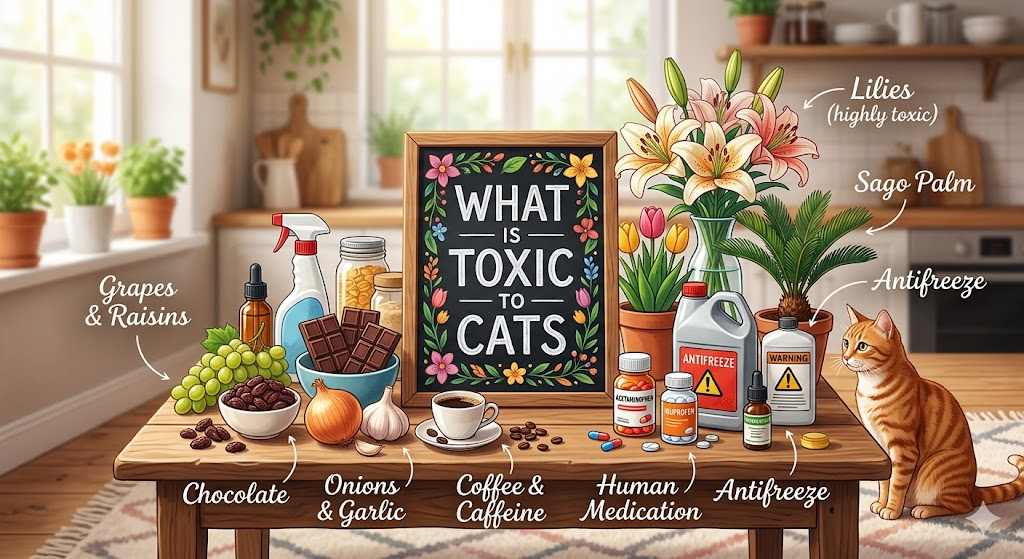
Chocolate
Contains substances that affect the heart and nervous system.
Onions, Garlic, and Chives
Can damage red blood cells and lead to weakness.
Alcohol
Even small amounts can cause serious internal issues.
Grapes and Raisins
Linked to severe reactions and organ stress.
Caffeine
Found in coffee, tea, and energy drinks — can overstimulate the body.
Xylitol
A sugar substitute found in gum and sweets that can be highly dangerous.
Raw Dough
Expands in the stomach and can release harmful gases.
Fatty and Salty Foods
Cause digestive upset and long-term health problems.
Plants and Flowers That Are Toxic to Cats
Lilies
Extremely dangerous — even pollen exposure can cause severe harm.
Aloe Vera
Causes digestive upset and lethargy.
Peace Lily
Leads to mouth irritation and drooling.
Tulips and Daffodils
Bulbs are especially toxic.
Azaleas and Rhododendrons
Affect the heart and nervous system.
Chrysanthemums
Can cause vomiting and skin irritation.
Oleander
Highly toxic and affects heart function.
Household Items That Are Toxic to Cats
Cleaning Products
Bleach, disinfectants, and sprays can irritate or poison cats.
Toothpaste
Contains ingredients like fluoride and artificial sweeteners that are unsafe.
Medications
Human medications can be extremely harmful, even in small doses.
Essential Oils
Some oils can cause breathing problems and neurological issues.
Pesticides and Insecticides
Highly toxic even in small exposure amounts.
Hidden Everyday Dangers
Not all toxins are obvious.
Watch out for:
- Scented candles
- Air fresheners
- Laundry detergents
- Paint and solvents
- Batteries
- Glue and adhesives
Cats may come into contact with these through surfaces or grooming.
Why Cats Get Exposed to Toxic Substances?
Cats may encounter toxins due to:
- Curiosity
- Smell attraction
- Boredom
- Exploring new objects
- Grooming behavior after contact
Even cautious cats can accidentally be exposed.
Can Cats Be Poisoned Without Eating Something?
Yes.
Exposure can happen through:
- Skin contact
- Inhaling fumes
- Licking contaminated fur
- Walking on treated surfaces
This makes prevention even more important.
What to Do If Your Cat Is Exposed to a Toxin?
If you suspect exposure:
- Remove the source immediately
- Keep your cat away from the substance
- Check for visible residue on fur or mouth
- Monitor for symptoms
- Seek guidance quickly
Avoid home remedies unless instructed.
When It Becomes an Emergency
Seek urgent care if your cat shows:
- Difficulty breathing
- Seizures
- Collapse
- Severe vomiting
- Extreme weakness
These signs require immediate attention.
How to Make Your Home Safer for Your Cat?
1. Store Dangerous Items Securely
Keep chemicals, food, and medications out of reach.
2. Choose Cat-Safe Plants
Avoid bringing toxic plants into your home.
3. Avoid Feeding Human Food
Many common foods are unsafe for cats.
4. Clean Surfaces Regularly
Remove residue from cleaning products and spills.
5. Use Pet-Safe Products
Always choose products designed for use around pets.
Why Prevention Is So Important?
Cats are small and sensitive, which means:
- Toxic effects happen quickly
- Recovery depends on early action
- Some toxins cause long-term damage
Preventing exposure is the safest approach.
Read Also : How Much Toothpaste Is Toxic to a Cat
Frequently Asked Questions
What is toxic to cats?
Many foods, plants, household chemicals, and medications can be toxic to cats.
Are small amounts of toxins dangerous?
Yes. Even tiny amounts can cause serious reactions.
Can indoor cats be exposed to toxins?
Yes. Most exposures happen inside the home.
Can cats recover from poisoning?
Yes, especially when treated early.
Is it safe to use regular household products around cats?
Not always. Many contain ingredients that are harmful.
Conclusion
Understanding what is toxic to cats is essential for keeping your pet safe. Everyday items — from food to plants to cleaning products — can pose hidden risks. Because cats are naturally curious and sensitive to many substances, even small exposures can lead to serious problems.
By identifying common toxins, keeping harmful items out of reach, and acting quickly in case of exposure, you can create a safe and secure environment for your cat.
Awareness and prevention are the best tools to protect your cat from avoidable dangers.
