
Roses are among the most beautiful and popular flowers in the world. People love them for decoration, gifting, celebrations, and home gardens. But if you live with a cat, you might wonder: Are roses safe for cats? Or could having roses in your home put your pet at risk?
This guide explains everything you need to know about cats and roses — including safety risks, why cats might chew on flowers, what to do if your cat eats a rose, and which similar flowers are dangerous.
Are Roses Cat Safe?
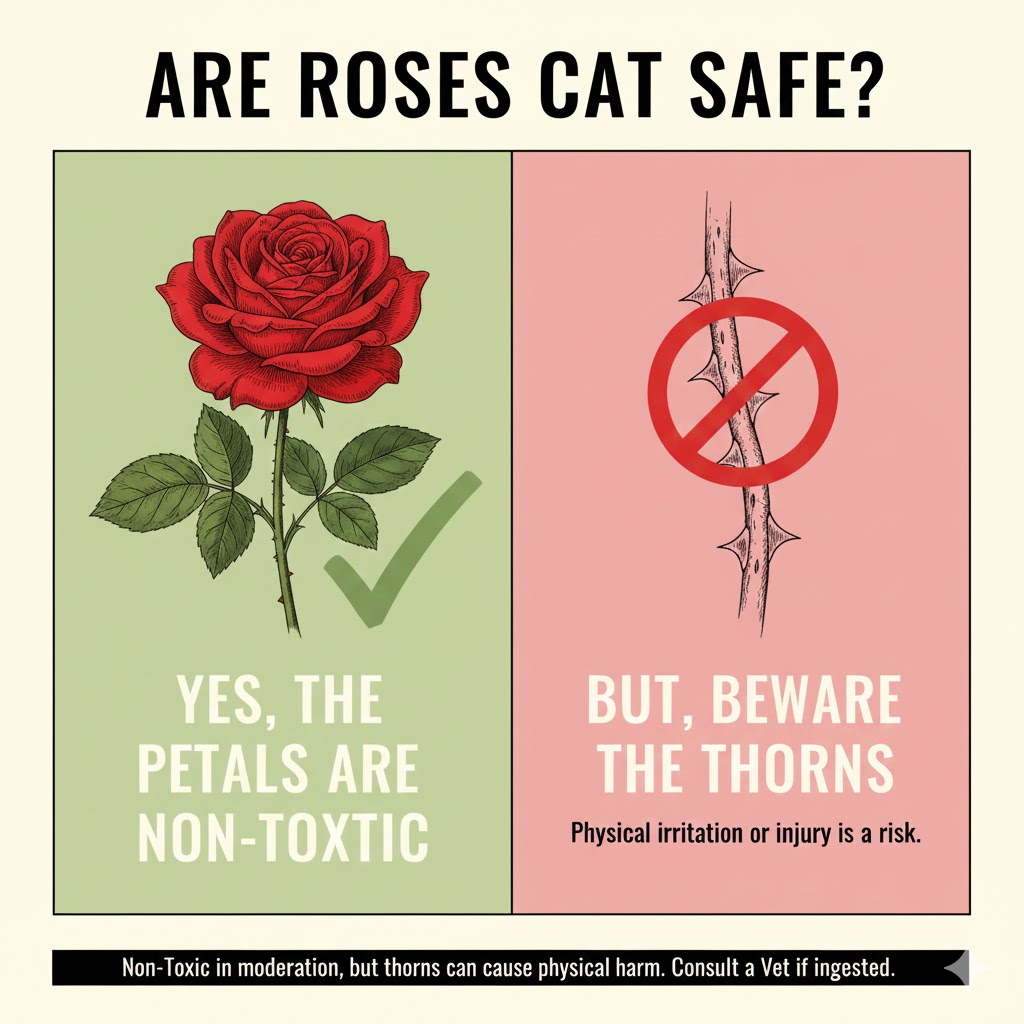
Roses themselves are generally considered non-toxic to cats. That means the petals and leaves of true roses are not poisonous if a cat chews or ingests a small amount.
However — and this is important — roses are not completely risk-free.
They still have thorns, pesticides, fertilizers, and stomach-upset risks, which can cause problems for cats.
So while roses are not poisonous, they can still be harmful in certain situations.
Are Rose Petals Safe for Cats?
Yes, rose petals are typically safe and non-toxic.
A cat might chew on a petal out of curiosity, boredom, or interest in the smell.
But eating petals may still cause:
- Mild stomach upset
- Vomiting
- Diarrhea
- Drooling
This is because cats’ digestive systems are not meant to process plant material. Even safe plants can make them sick if eaten in large enough amounts.
Are Rose Leaves Safe for Cats?
Rose leaves are also non-toxic.
They won’t poison a cat, but they may cause:
- Stomach irritation
- Gas or diarrhea
- Minor discomfort
Cats often nibble plants when stressed, bored, or seeking texture. Leaf-chewing is common but should still be discouraged.
The Hidden Danger: Rose Thorns
The biggest risk roses pose to cats is their sharp thorns.
Thorns can cause:
- Cuts inside the mouth
- Scratches on the face
- Injuries to paws
- Splinters
- Eye injuries (if cats bat at the stems)
Cats are playful and curious, so a rose arrangement with exposed thorns can be a hazard.
If you bring roses home, always trim the thorns or choose bouquets that have them removed.
Can Cats Be Allergic to Roses?
It’s possible, though not common.
Cats can develop sensitivities to various plants, including roses.
Symptoms might include:
- Sneezing
- Watery eyes
- Itchy skin
- Mild swelling around the nose
- Pawing at the face
These symptoms are usually mild and temporary.
Why Do Cats Eat Roses or Plants?
Cats may try to chew roses for several reasons:
1. Natural Curiosity
Cats explore their world with their mouths. Flowers may smell interesting or look like toys.
2. Boredom
Indoor cats may chew plants when they need stimulation.
3. Texture Attraction
Soft petals or crispy leaves may feel good to bite.
4. Nutrient Curiosity
Some cats eat plants as a natural instinct, similar to outdoor cats chewing grass.
5. Stress or Anxiety
Changes in the home environment may cause stress-chewing behavior.
Providing enrichment can reduce destructive chewing:
- Cat grass
- Toys
- Scratching posts
- Climbing structures
What Happens If a Cat Eats a Rose?
If your cat eats a rose petal, leaf, or stem, here’s what may happen:
1. Mild Stomach Upset
Most cats will simply pass the plant material naturally.
Signs include:
- Soft stool
- Vomiting once or twice
- Temporary loss of appetite
These symptoms often resolve quickly.
2. Throat or Mouth Irritation
If thorns were swallowed or chewed, the cat may:
- Paw at the mouth
- Drool
- Refuse food
3. Diarrhea
Plant matter can irritate the digestive system.
4. No Symptoms at All
Some cats eat a small amount and show no reaction.
If your cat exhibits more than mild symptoms, it’s best to monitor closely and provide fresh water.
When Roses Become Unsafe
Even though roses aren’t toxic, certain situations can make them unsafe for cats.
1. Pesticides or Chemicals on Roses
Store-bought roses often contain:
- Pesticide residue
- Chemical preservatives
- Floral sprays
- Fertilizers
These substances may irritate or harm cats if ingested.
Whenever possible:
- Rinse store-bought roses before putting them inside your home
- Keep treated plants out of reach
2. Large Amounts of Rose Material
While small amounts cause mild symptoms, large amounts may lead to:
- Persistent vomiting
- Diarrhea
- Lethargy
- Appetite loss
Cats rarely overeat flowers, but it’s still a possibility.
3. Rose Water, Rose Oil, or Rose-Scented Products
These are different from actual roses.
Some scented products may contain:
- Essential oils
- Artificial fragrances
- Alcohol
- Concentrated extracts
These can be irritating or harmful to cats.
Avoid using scented products directly on or around your cat.
4. Thorn Injuries
As mentioned earlier, thorns pose one of the biggest risks.
Cats can easily hurt themselves when swatting or chewing thorny stems.
Safe Alternatives to Roses
If you want cat-friendly flowers, here are some safe options:
- Sunflowers
- Marigolds
- Orchids
- Snapdragons
- Gerbera daisies
- Zinnias
These flowers are generally considered non-toxic and safe to have around cats.
Flowers That Are Dangerous for Cats
This part is important:
Many flowers look similar to roses but are toxic.
Common toxic look-alikes include:
- Tulips
- Lilies
- Daffodils
- Chrysanthemums
- Baby’s breath
- Azaleas
- Peonies
Lilies, in particular, are extremely dangerous — even a small amount can be harmful.
Never assume a flower is safe just because it resembles a rose.
How to Keep Your Cat Safe Around Roses
You don’t need to give up having flowers at home.
Just follow these precautions:
1. Trim the Thorns
Cut off all sharp thorns before placing roses in a vase.
2. Keep Roses Out of Reach
Place them:
- On high shelves
- In closed rooms
- Behind protective barriers
3. Use a Stable Vase
Cats love knocking things over.
Choose a heavy vase that won’t tumble easily.
4. Rinse the Flowers
Washing reduces chemical residue.
5. Provide Cat Grass
Giving your cat safe greens can reduce the desire to chew your flowers.
6. Watch for Chewing Behavior
If your cat keeps returning to the roses, move them out of reach.
What to Do If Your Cat Eats a Rose
If you suspect your cat has eaten rose petals, leaves, or stems, follow these steps:
1. Stay Calm
Roses are non-toxic and rarely cause serious problems.
2. Remove the Plant
Place it out of reach to prevent more chewing.
3. Offer Water
Hydration helps flush out plant material.
4. Watch for Symptoms
Monitor for:
- Vomiting
- Diarrhea
- Drooling
- Lethargy
- Mouth pain
5. Check the Mouth for Thorns
Look for:
- Redness
- Cuts
- Swelling
- Stuck thorns
If you see a thorn, do not forcefully remove it; seek help.
6. Seek Assistance If Symptoms Persist
If your cat continues vomiting, stops eating, or seems uncomfortable, reach out to a professional.
Read Also : How Long Can a Cat Go Without Eating
Frequently Asked Questions
1. Are roses toxic to cats?
No, true roses are non-toxic. They are considered safe but may cause mild stomach upset.
2. Can roses hurt cats?
Yes, thorns, pesticides, and overeating can cause issues even though the plant itself is non-toxic.
3. What if my cat keeps eating plants?
Offer cat grass, increase playtime, and remove tempting plants from reach.
4. Are dried roses safe for cats?
They are non-toxic but can cause choking or stomach irritation if ingested.
5. Are rose petals safe for cats to smell?
Yes, smelling is harmless. Problems usually come from chewing or swallowing.
6. Do cats like the smell of roses?
Some do, some don’t. Each cat reacts differently to floral scents.
Conclusion
Roses are generally safe and non-toxic for cats, making them one of the friendlier flower choices for pet owners. However, “safe” doesn’t mean “risk-free.” Thorns, chemicals, and overeating can still cause problems. With a few simple precautions — like trimming thorns, rinsing flowers, and keeping them out of reach — you can enjoy roses at home without compromising your cat’s safety.
If your cat ever chews on a rose, the situation is usually mild and manageable. Still, keeping an eye on symptoms ensures your pet stays healthy and comfortable.
