
Chocolate is one of the most common household treats — but for cats, it can be dangerous. Even though cats are less likely than dogs to eat chocolate, accidents do happen. A curious lick of cake frosting, a bite of brownie, or access to baking chocolate can quickly become a serious issue.
If you’re wondering how much chocolate is toxic to a cat, the answer depends on several factors — including the type of chocolate, your cat’s weight, and how much was consumed.
This guide explains:
- Why chocolate is toxic to cats
- How much is considered dangerous
- Symptoms to watch for
- What to do immediately
- When it becomes an emergency
- How to prevent chocolate poisoning
Understanding the risks could help protect your cat’s life.
Why Is Chocolate Toxic to Cats?
Chocolate contains two substances that are harmful to cats:
- Theobromine
- Caffeine
Both belong to a group of chemicals called methylxanthines. Cats process these substances very slowly, meaning toxins stay in their system longer than in humans.
Even small amounts can overstimulate:
- The nervous system
- The heart
- The digestive system
This overstimulation can lead to serious health problems.
How Much Chocolate Is Toxic to a Cat?
There is no completely “safe” amount of chocolate for cats. Toxicity depends on:
- The type of chocolate
- The amount eaten
- Your cat’s body weight
- Your cat’s overall health
General Risk Guidelines
While exact numbers vary, toxicity may begin at relatively low amounts compared to a cat’s small body size.
For example:
- Dark chocolate and baking chocolate are highly concentrated and dangerous even in small bites.
- Milk chocolate contains less theobromine but can still be harmful if consumed in moderate amounts.
- White chocolate contains very little theobromine but is still unhealthy due to fat and sugar content.
Because cats are typically small animals, it doesn’t take much chocolate to create a problem.
Even a small piece of dark chocolate may cause symptoms in a small cat.
Which Type of Chocolate Is Most Dangerous?
Not all chocolate carries the same level of risk.
Most Dangerous:
- Baking chocolate
- Cocoa powder
- Dark chocolate
These contain the highest concentration of theobromine.
Moderate Risk:
- Semi-sweet chocolate
- Milk chocolate
Lower Risk (but still unsafe):
- White chocolate
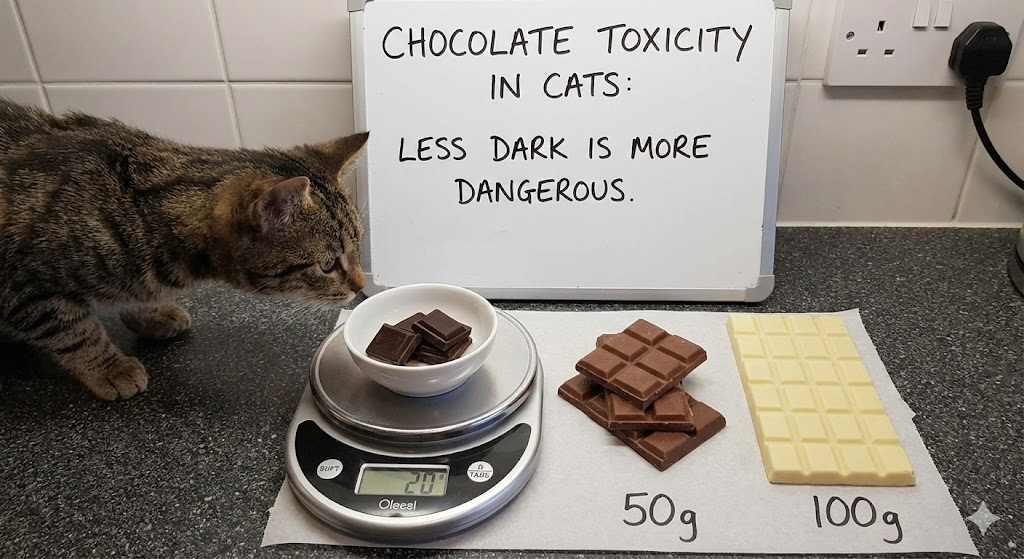
The darker and more bitter the chocolate, the more toxic it is.
How Chocolate Affects a Cat’s Body
Chocolate toxicity can impact multiple systems.
1. Nervous System
- Hyperactivity
- Tremors
- Seizures
2. Heart
- Rapid heartbeat
- Irregular rhythm
- Increased blood pressure
3. Digestive System
- Vomiting
- Diarrhea
- Abdominal discomfort
4. Muscles
- Restlessness
- Muscle twitching
Severe poisoning can become life-threatening if untreated.
Symptoms of Chocolate Toxicity in Cats
Signs may appear within a few hours after ingestion.
Watch for:
- Vomiting
- Diarrhea
- Restlessness
- Increased thirst
- Rapid breathing
- Fast heart rate
- Tremors
- Weakness
- Seizures
Symptoms can worsen over time if the toxin continues circulating in the bloodstream.
When Does It Become an Emergency?
Immediate emergency care is necessary if your cat shows:
- Seizures
- Collapse
- Extreme hyperactivity
- Difficulty breathing
- Uncontrollable tremors
These signs indicate severe toxicity.
What to Do If Your Cat Eats Chocolate
If you suspect your cat consumed chocolate:
Step 1: Remove Access
Take away the chocolate immediately.
Step 2: Determine What Was Eaten
Identify:
- The type of chocolate
- The estimated amount
- The time it was consumed
Step 3: Contact a Professional Immediately
Do not wait for symptoms to appear.
Even if your cat seems normal, early advice can prevent complications.
Step 4: Do Not Induce Vomiting at Home
Never try home remedies without professional instruction.
How Chocolate Poisoning Is Treated
Treatment depends on:
- The amount consumed
- The type of chocolate
- The time since ingestion
- The cat’s condition
Care may include:
- Monitoring
- Fluid therapy
- Medication to control symptoms
- Supportive care
Early intervention improves recovery chances significantly.
Can Cats Recover from Chocolate Poisoning?
Yes — especially when treated quickly.
Mild cases may resolve with prompt care. Severe cases require more intensive treatment but can still have positive outcomes if addressed early.
Delaying treatment increases risk.
Why Cats Usually Don’t Seek Chocolate
Unlike dogs, cats do not have strong taste receptors for sweetness. This makes them less naturally attracted to chocolate.
However, they may still consume chocolate if:
- It is mixed into dairy-based desserts
- It contains cream or butter
- It is part of baked goods
- They accidentally access cocoa powder
Curiosity and scent can lead to accidental ingestion.
Hidden Chocolate Sources You Might Overlook
Chocolate isn’t just candy bars.
Watch out for:
- Brownies
- Cakes
- Cookies
- Ice cream
- Protein bars
- Hot cocoa powder
- Chocolate-covered nuts
- Holiday gift boxes
Even small crumbs can pose risk.
How to Prevent Chocolate Exposure
Prevention is simple but important.
1. Store Chocolate Securely
Keep it in sealed containers and out of reach.
2. Avoid Leaving Desserts Unattended
Especially on counters or coffee tables.
3. Educate Household Members
Ensure everyone understands that chocolate is unsafe for cats.
4. Dispose of Wrappers Safely
Cats may chew on wrappers with leftover residue.
Does Body Weight Matter?
Yes.
Smaller cats are at higher risk from small amounts. A larger cat may tolerate slightly more before symptoms appear, but no amount is considered safe.
Always assume risk if chocolate is ingested.
What About Cocoa Powder?
Cocoa powder is extremely concentrated.
Even small spoonfuls can be dangerous. Because it is highly potent, ingestion requires immediate attention.
How Fast Do Symptoms Appear?
Symptoms may develop within:
- A few hours
- Sometimes sooner
However, internal effects may begin before visible signs appear.
That is why early contact with a professional is critical.
Read Also : What to Do If Cat Ate Toxic Plant
Frequently Asked Questions
Can one lick of chocolate hurt a cat?
A small lick may not cause severe toxicity, but it should still be taken seriously.
Is white chocolate safe for cats?
White chocolate contains very little theobromine but is still unhealthy due to fat and sugar content.
Can chocolate cause long-term damage?
Severe poisoning may affect heart or neurological function if not treated promptly.
Should I wait to see symptoms?
No. Early advice is always safer than waiting.
Are kittens at higher risk?
Yes. Their smaller size makes even tiny amounts more concerning.
Final Thoughts
Understanding how much chocolate is toxic to a cat is essential for responsible pet care. While the exact toxic amount varies, even small portions — especially dark or baking chocolate — can pose serious risks.
Chocolate toxicity affects the heart, nervous system, and digestive tract. Symptoms can escalate quickly, so immediate action is important if ingestion occurs.
The safest rule is simple:
Chocolate should never be given to cats — in any amount.
Keeping chocolate securely stored and acting quickly in case of exposure can protect your cat from preventable harm.
