
Many cat owners struggle with the same frustrating problem: spraying. If you’re searching for how to stop a cat from spraying, you’re not alone. Spraying is one of the most misunderstood cat behaviors, and it often leads to stress, odor problems, and confusion for owners.
The good news is that spraying is not random or “bad behavior.” Cats spray for specific reasons, and once you understand those reasons, the problem becomes much easier to manage. This guide explains why cats spray, how spraying differs from normal urination, and the most effective ways to stop it without harming your cat or damaging your bond.
What Is Cat Spraying?
Spraying is a form of scent marking.
When a cat sprays:
- They usually stand upright
- The tail may quiver
- A small amount of urine is released onto vertical surfaces
This behavior is different from normal litter box use and serves as a form of communication.
Why Cats Spray
To stop spraying, you must first understand the cause.
Territorial Marking
Cats use scent to mark territory.
Spraying may occur when:
- A new pet enters the home
- Another cat is visible through windows
- The cat feels its space is threatened
This is one of the most common causes.
Stress and Anxiety
Stress plays a major role in spraying.
Common stress triggers include:
- Moving to a new home
- Changes in routine
- Loud noises or frequent visitors
- Conflict with other pets
Spraying helps cats feel more secure.
Hormonal Influence
Hormones strongly affect spraying behavior.
- Unneutered males spray most frequently
- Females can spray too
- Hormones increase territorial instincts
This is a biological response, not defiance.
Medical Issues
Sometimes spraying is linked to discomfort.
Possible contributors:
- Urinary tract irritation
- Pain while urinating
- Underlying health conditions
Medical causes should always be ruled out.
Spraying vs Litter Box Problems
It’s important to tell the difference.
Spraying:
- Small amounts
- Vertical surfaces
- Strong odor
- Intentional marking
Litter box issues:
- Large puddles
- Horizontal surfaces
- Often near the litter box
Each requires a different solution.
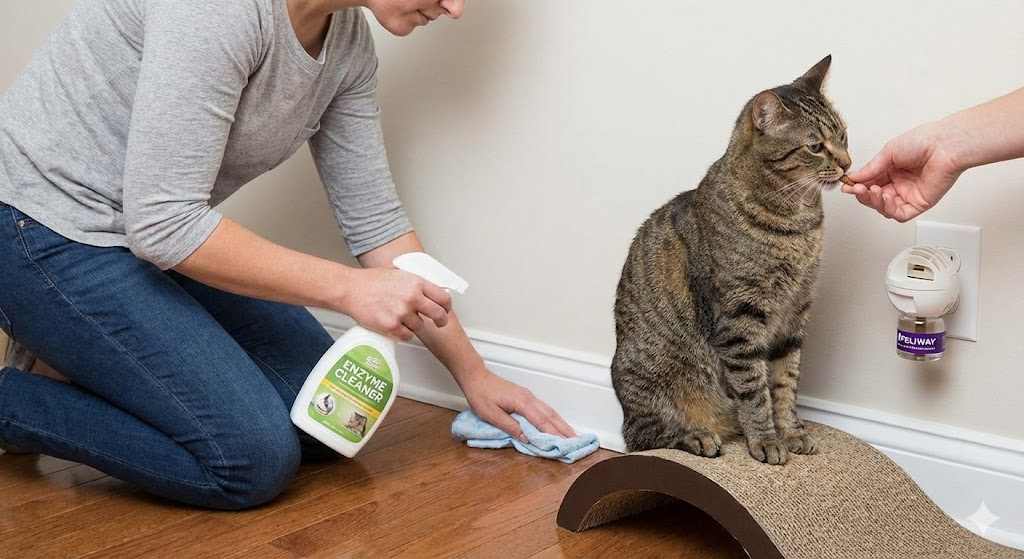
How to Stop a Cat From Spraying: Step-by-Step
Address Stress First
Reducing stress often reduces spraying.
Helpful steps include:
- Keeping daily routines consistent
- Providing quiet resting areas
- Avoiding sudden environmental changes
A calm cat sprays less.
Limit Visual Triggers
Seeing outdoor animals can trigger spraying.
Try:
- Closing blinds
- Blocking window views temporarily
- Using window film
Reducing perceived threats lowers marking behavior.
Clean Sprayed Areas Properly
Incomplete cleaning encourages repeat spraying.
Important tips:
- Use cleaners designed to break down odor compounds
- Clean thoroughly, not just the surface
- Avoid ammonia-based products
If the scent remains, the cat may spray again.
Make Sprayed Areas Unappealing
After cleaning:
- Rearrange furniture
- Place feeding bowls near the spot
- Add textures cats dislike
Cats avoid spraying where they eat or rest.
Improve Litter Box Conditions
Even spraying cats still use litter boxes.
Ensure:
- Boxes are cleaned regularly
- Litter is unscented
- Boxes are easy to access
- There are enough boxes for the household
Poor litter box conditions increase stress.
Behavioral Changes That Help Stop Spraying
Increase Environmental Enrichment
A bored or anxious cat is more likely to spray.
Add:
- Interactive toys
- Vertical climbing spaces
- Scratching posts
Mental stimulation reduces stress-related behaviors.
Create Safe Zones
Cats need places where they feel secure.
Provide:
- Elevated resting spots
- Quiet rooms
- Hiding spaces
Security lowers the need to mark territory.
Avoid Punishment
Punishing spraying is ineffective.
Why punishment fails:
- Increases anxiety
- Damages trust
- Does not address the cause
Calm correction works better than fear.
How Hormones Affect Spraying
Hormonal influence is powerful.
Once hormone levels stabilize:
- Territorial marking often decreases
- Stress-related spraying reduces
- Behavior becomes more predictable
This change can make a significant difference.
Why Spraying Sometimes Starts Suddenly
A sudden change often has a trigger.
Possible reasons include:
- New animals nearby
- Rearranged furniture
- Changes in household schedule
- Stressful events
Identifying the trigger helps stop recurrence.
Can Multiple Cats Increase Spraying?
Yes, multi-cat homes see spraying more often.
Reasons include:
- Competition for space
- Shared litter boxes
- Territory disputes
Managing space and resources is essential.
How Long Does It Take to Stop Spraying?
Results vary.
Factors include:
- Cause of spraying
- How quickly changes are made
- Cat’s personality
Some cats improve within weeks, others take longer.
Common Mistakes That Make Spraying Worse
Avoid these common errors:
- Ignoring stress signals
- Using harsh cleaners
- Changing too many things at once
- Expecting instant results
Consistency matters.
When to Seek Professional Help
Extra support may be needed if:
- Spraying continues despite changes
- Behavior worsens
- Cat shows signs of distress
Early help prevents long-term habits.
Preventing Future Spraying
Once spraying stops, prevention is key.
Maintain:
- Clean environment
- Stable routines
- Calm interactions
- Regular observation
Prevention is easier than correction.
Read Also : How to Tell If a Cat Is Pregnant
Frequently Asked Questions
Can female cats spray?
Yes, females can spray, especially when stressed.
Does spraying mean my cat is angry?
No, spraying is communication, not anger.
Will spraying stop on its own?
Sometimes, but often it continues without intervention.
Is spraying a sign of dominance?
It’s more about territory and security than dominance.
Can indoor cats spray?
Yes, indoor cats spray just as outdoor cats can.
Conclusion
Learning how to stop a cat from spraying starts with understanding why it happens. Spraying is not misbehavior—it’s a response to stress, hormones, or environmental changes.
By addressing the root cause, cleaning properly, reducing stress, and creating a secure environment, most spraying issues can be resolved. With patience and consistency, your cat can feel calmer, and your home can return to being a comfortable, odor-free space.
