
Many people believe cats cannot be trained. This myth exists because cats behave very differently from dogs. Cats are independent, selective, and motivated by their own comfort. However, cats can be trained — when training is done the right way.
Training a cat is not about control or dominance. It’s about communication, consistency, and understanding feline behavior. Whether you want to teach your cat good habits, stop unwanted behavior, or encourage positive actions, proper training can make life easier for both of you.
This guide explains how to train a cat step by step, what cats can realistically learn, and how to avoid the mistakes that cause training to fail.
Can Cats Really Be Trained?
Yes, cats can be trained — but not in the same way as dogs.
Cats respond best to:
- Routine
- Rewards
- Positive experiences
- Short, gentle sessions
They do not respond well to punishment, yelling, or force. These methods only create fear and stress, which make behavior worse.
Cats learn through association, not obedience.
How Cats Learn
Understanding how cats learn is essential before starting training.
Cats are motivated by:
- Food
- Comfort
- Play
- Safety
They repeat behaviors that bring positive outcomes and avoid behaviors linked to discomfort.
Key principles of cat learning
- Cats learn faster in calm environments
- Training sessions must be short
- Repetition builds habits
- Timing matters more than intensity
If a reward comes too late, the cat won’t understand what behavior earned it.
Best Age to Train a Cat
Cats can be trained at any age, but learning speed varies.
Kittens
- Learn quickly
- Are more adaptable
- Form habits easily
Adult Cats
- Can still learn
- May take more repetition
- Need patience
Senior Cats
- Can learn gentle routines
- Benefit from calm, slow training
Age does not prevent training — only expectations should change.
What You Can Train a Cat to Do
Cats are capable of learning many useful behaviors, including:
- Using the litter box
- Coming when called
- Sitting on command
- High-five or paw touch
- Walking on a harness
- Using scratching posts
- Staying off counters
- Reducing unwanted meowing
- Entering a carrier calmly
Training focuses on habits, not tricks.
What You Should Never Do When Training a Cat
Certain actions will damage trust and stop learning completely.
Never:
- Yell or shout
- Hit or spray water
- Rub nose in accidents
- Force physical movement
- Punish after the behavior has passed
Cats do not connect punishment with past actions. They only associate it with you.
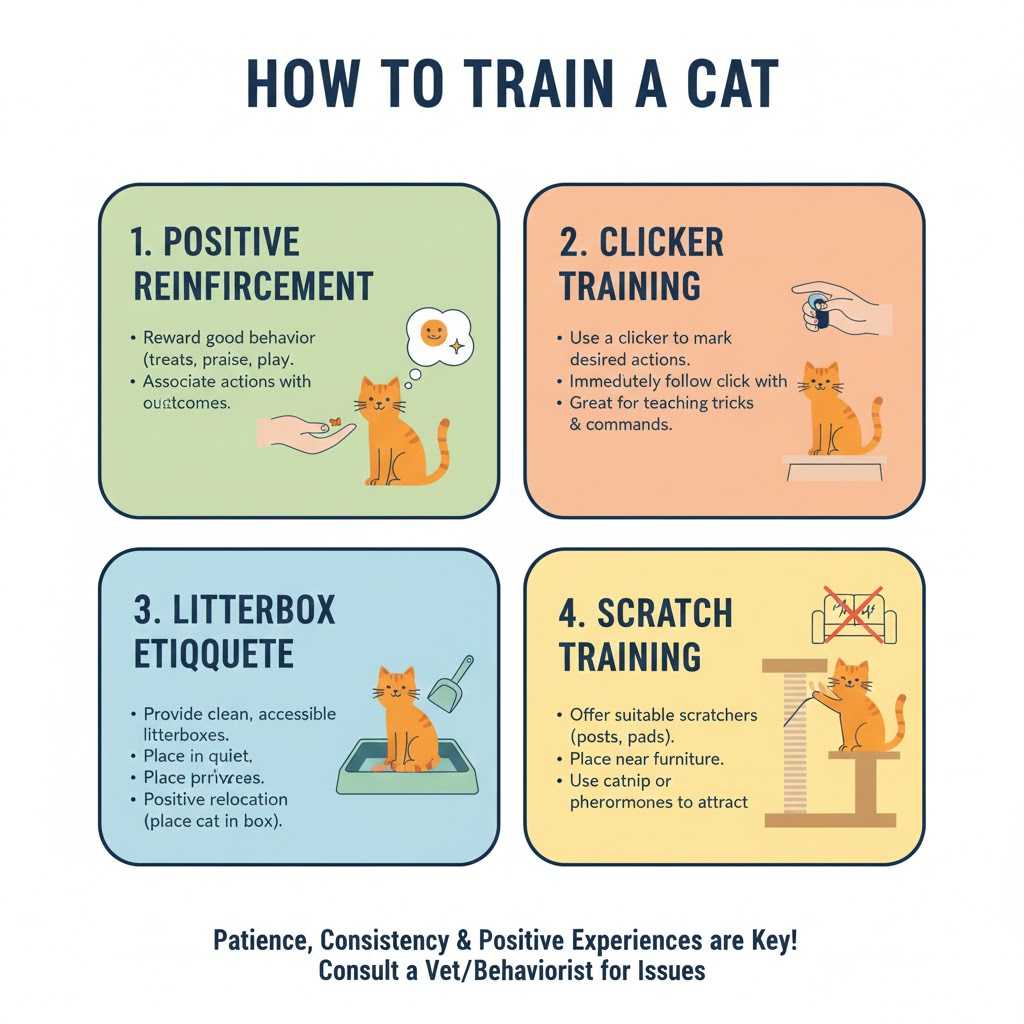
How to Train a Cat: Step-by-Step Guide
Step 1: Create the Right Environment
Choose a quiet, familiar place with no distractions.
Good training environments are:
- Calm
- Quiet
- Free of other pets
- Comfortable
Training during chaos or stress will fail.
Step 2: Choose the Right Rewards
Rewards are the foundation of cat training.
Effective rewards include:
- Small food treats
- Wet food spoon-licks
- Favorite toys
- Gentle praise
Food works best, but rewards must be tiny to avoid overfeeding.
Step 3: Use Timing Correctly
Reward immediately after the desired behavior.
A delay of even a few seconds can confuse your cat.
For example:
- Cat sits → reward instantly
- Cat scratches post → reward instantly
Timing is more important than the size of the reward.
Step 4: Keep Sessions Short
Cats have short attention spans.
Ideal training session:
- 3 to 5 minutes
- Once or twice daily
End sessions before your cat loses interest.
Step 5: Be Consistent
Consistency builds understanding.
That means:
- Same command words
- Same rules
- Same reactions
If one day a behavior is allowed and the next day it’s punished, the cat becomes confused.
How to Train a Cat to Use the Litter Box
Most cats instinctively use litter boxes, but problems can occur.
Training tips
- Place box in a quiet area
- Scoop daily
- Use unscented litter
- Avoid frequent litter changes
- Keep boxes clean
If a cat avoids the box, training alone won’t fix it — the cause must be addressed.
How to Train a Cat to Come When Called
Yes, cats can learn their name.
Steps
- Say the cat’s name calmly
- Immediately offer a treat
- Repeat several times daily
- Gradually increase distance
Never call your cat for negative experiences like grooming or medicine.
How to Train a Cat to Sit
This is one of the easiest behaviors to teach.
Steps
- Hold a treat above the cat’s head
- Move it slightly backward
- As the cat sits, reward immediately
- Repeat gently
Add the word “sit” once the motion becomes natural.
How to Stop Unwanted Cat Behavior
Instead of punishment, use redirection.
Common problems & solutions
Scratching furniture
- Provide scratching posts
- Place posts near furniture
- Reward when used
Jumping on counters
- Remove food temptation
- Provide higher cat trees
- Reward ground behavior
Excessive meowing
- Ignore attention-seeking meows
- Reward quiet moments
- Ensure needs are met
How to Train a Cat Using Clicker Training
Clicker training is effective because it marks behavior instantly.
How it works
- Click = “Yes, that’s right”
- Treat follows the click
Steps
- Click
- Give treat
- Repeat until association forms
Then click only when desired behavior happens.
How Long Does It Take to Train a Cat?
Training time varies by:
- Cat personality
- Age
- Motivation
- Consistency
Some behaviors take:
- A few days
- Others take weeks
Progress is not linear — patience matters.
Common Training Mistakes
Avoid these errors:
- Expecting fast results
- Training too long
- Inconsistent rules
- Rewarding accidentally
- Ignoring stress signals
Training should never feel forced.
Signs Your Cat Is Learning
Positive signs include:
- Repeating behaviors
- Approaching training area
- Staying engaged
- Reduced unwanted behavior
These signals show progress.
How to Build a Strong Training Bond
Training strengthens trust when done properly.
To build a bond:
- Stay calm
- Be patient
- Respect boundaries
- End sessions positively
Cats remember how training makes them feel.
Training Shy or Nervous Cats
Shy cats need slower pacing.
Tips:
- Start with food trust
- Avoid eye contact
- Keep distance
- Reward presence, not actions
Confidence builds gradually.
Training Multiple Cats
Train cats separately.
Reasons:
- Avoid competition
- Reduce stress
- Ensure clear communication
Once trained individually, group routines can form.
Read Also : Are Roses Cat Safe
Frequently Asked Questions
Can you train a cat without treats?
Yes, but it takes longer. Food is the strongest motivator.
Is it too late to train an adult cat?
No. Adult cats can learn at any age.
Should I punish my cat for bad behavior?
No. Punishment creates fear, not learning.
How often should I train my cat?
Short daily sessions work best.
Why does my cat ignore training sometimes?
Cats disengage when tired, stressed, or full.
Conclusion
Training a cat is absolutely possible when approached with patience, respect, and understanding. Cats don’t respond to force or dominance — they respond to consistency and positive experiences. Whether you’re teaching basic manners or improving daily habits, gentle training strengthens communication and trust.
With the right approach, training becomes a rewarding experience for both you and your cat.
