
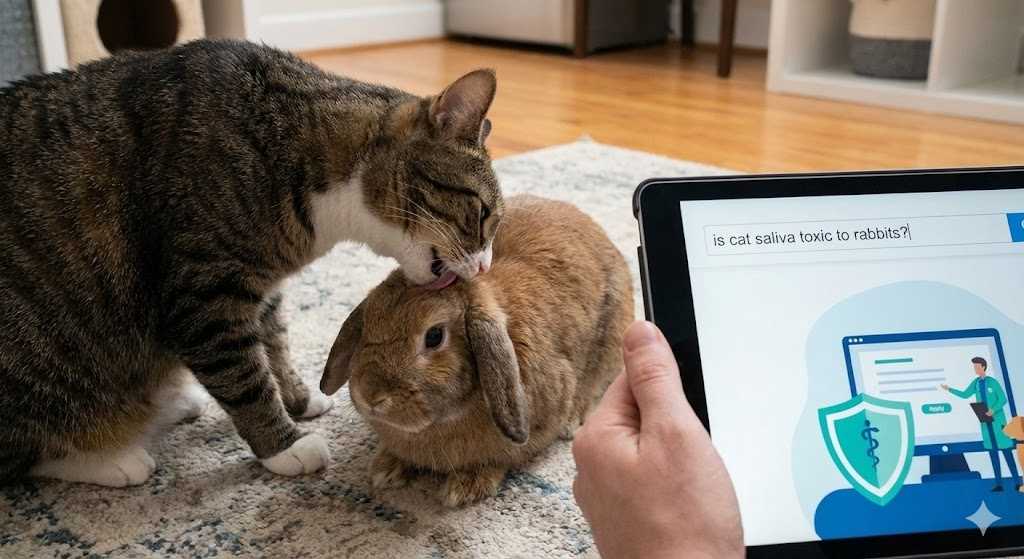
Many pet lovers share their homes with more than one species. Cats and rabbits are both popular companion animals, but their interaction raises an important concern: is cat saliva toxic to rabbits?
Even when a cat seems calm or playful, contact between a cat’s mouth and a rabbit can be dangerous. Rabbits are delicate animals with sensitive immune systems, and what may seem harmless to a cat can become a serious health issue for a rabbit.
This article explains the real risks of cat saliva, what makes it dangerous, what symptoms to watch for, and how to protect rabbits in mixed-pet households.
What Is in Cat Saliva?
Cat saliva contains a mix of:
- Natural bacteria
- Enzymes that help with digestion
- Microorganisms that are harmless to cats
Cats are immune to most of the bacteria in their mouths, but other animals are not. For rabbits, exposure can lead to rapid infection.
Is Cat Saliva Toxic to Rabbits?
Cat saliva is not toxic like poison, but it can be extremely dangerous to rabbits.
The main threat comes from bacteria, not chemicals. A rabbit’s immune system is not equipped to fight certain bacteria commonly found in a cat’s mouth.
Even a small bite, scratch, or lick on broken skin can result in serious illness.
Why Cat Saliva Is Dangerous for Rabbits
The danger lies in how rabbits respond to bacterial exposure.
Key reasons include:
- Rabbits have fragile immune systems
- Infections can spread very quickly
- Symptoms may appear mild at first
- Internal damage can progress rapidly
In many cases, rabbits become severely ill before obvious signs appear.
Common Bacteria Found in Cat Saliva
One of the most concerning bacteria commonly present in cat saliva can cause:
- Severe infections
- Rapid tissue damage
- Bloodstream infections
Cats carry these bacteria naturally without showing symptoms, which makes the risk easy to underestimate.
Can a Simple Lick Harm a Rabbit?
Yes, under certain conditions.
A lick can be dangerous if:
- The rabbit has a small cut or scratch
- The saliva enters the nose, mouth, or eyes
- The rabbit is very young, old, or stressed
Healthy skin offers some protection, but rabbits groom themselves often, increasing exposure risk.
Cat Bites vs. Cat Scratches
Both are dangerous, but bites are especially risky.
Cat Bites
- Deep puncture wounds
- Bacteria trapped under the skin
- Fast-spreading infection
Cat Scratches
- Can still introduce saliva
- Risk increases if the cat licks its paws
Either situation requires immediate attention.
Symptoms of Infection in Rabbits
Rabbits often hide illness, so symptoms may be subtle.
Watch for:
- Lethargy or weakness
- Loss of appetite
- Swelling or warmth at wound site
- Fever
- Difficulty breathing
- Hunched posture
Any sudden change in behavior is a warning sign.
How Fast Can a Rabbit Get Sick?
Infections from cat saliva can progress very quickly, sometimes within:
- 12 to 24 hours
This rapid progression is what makes cat saliva especially dangerous for rabbits.
Is Cat Saliva More Dangerous Than Dog Saliva for Rabbits?
Yes, generally.
While dog saliva also contains bacteria, cat saliva poses a higher risk because:
- Cats have sharper teeth
- Bites are deeper
- Certain bacteria are more aggressive
This makes cat-related injuries more dangerous for rabbits.
Can Indoor Cats Still Be Dangerous to Rabbits?
Yes.
Even indoor cats:
- Carry bacteria naturally
- Groom themselves frequently
- Can injure rabbits unintentionally
A cat doesn’t need to be aggressive to cause harm.
Can Rabbits and Cats Live Together Safely?
In some homes, yes—but only with strict precautions.
Important safety measures include:
- Never leaving them unsupervised
- Keeping rabbits in secure enclosures
- Ensuring cats cannot access rabbit areas
Trusting a cat’s behavior alone is not enough.
What to Do If a Cat Licks or Bites a Rabbit
Immediate action matters.
Steps to take:
- Separate the animals
- Check the rabbit carefully for wounds
- Clean visible injuries gently if possible
- Monitor closely for behavior changes
Even if the wound looks small, it can still be dangerous.
Why Rabbits Are So Vulnerable
Rabbits differ from many other pets because:
- They are prey animals
- Stress weakens their immune system
- Their bodies respond poorly to infection
What might be a minor injury for another animal can be life-threatening for a rabbit.
Can Cat Saliva Kill a Rabbit?
In severe cases, yes.
Without proper care:
- Infection can enter the bloodstream
- Organs may fail
- Recovery becomes difficult
This is why any cat-related injury should be taken seriously.
Is Grooming Between Cats and Rabbits Safe?
No.
Even gentle grooming:
- Transfers saliva
- Increases infection risk
- Encourages unsafe interaction
This behavior should always be discouraged.
How to Prevent Dangerous Interactions
Prevention is the safest approach.
Separate Living Spaces
- Use secure enclosures
- Keep rabbits in cat-free zones
Supervised Interaction Only
- Short, controlled sessions
- Immediate separation if the cat fixates
Reduce Stress
- Calm environment
- Predictable routines
Common Myths About Cats and Rabbits
Myth: My cat is gentle, so it’s safe
Truth: Even gentle cats carry harmful bacteria.
Myth: Only bites are dangerous
Truth: Licks and scratches can also cause infection.
Myth: Rabbits will fight off infection
Truth: Rabbits often cannot.
Can Humans Transfer Cat Saliva to Rabbits?
Indirectly, yes.
Examples include:
- Touching a cat’s mouth, then handling a rabbit
- Sharing grooming tools
- Poor hand hygiene
Washing hands between handling pets reduces risk.
How to Keep a Multi-Pet Home Safe
A safe home focuses on prevention and awareness.
Key habits:
- Wash hands between pets
- Keep feeding and grooming items separate
- Watch for stress signals
- Act quickly if contact occurs
Read Also : Is Cat Poop Toxic to Dogs
Frequently Asked Questions
Is cat saliva toxic to rabbits?
It is not poison, but it can cause severe bacterial infection.
Can a rabbit survive a cat bite?
Survival is possible, but rapid care is critical.
Is a lick as dangerous as a bite?
It can be, especially if skin is broken.
Can rabbits and cats ever be friends?
They may coexist, but close contact is risky.
Should I allow my cat near my rabbit?
Only with strict supervision and barriers.
Conclusion
So, is cat saliva toxic to rabbits? While it isn’t toxic in the traditional sense, it can be extremely dangerous due to bacteria that rabbits cannot fight effectively. Even minor contact can lead to serious illness if not addressed quickly.
The safest approach is prevention—keeping cats and rabbits separated, supervising interactions carefully, and responding immediately to any contact involving a cat’s mouth. With the right precautions, you can protect your rabbit and maintain a safe, calm home for all your pets.
