
Flowers make homes brighter, gardens more beautiful, and gifts more meaningful. However, many flowers that look harmless can be extremely dangerous for cats. Cats are naturally curious animals, and even brushing against, licking, or chewing certain flowers can lead to serious health problems.
If you are searching what flowers are toxic to cats, it likely means you want to protect your cat from accidental poisoning. Understanding which flowers are unsafe is one of the most important steps in creating a cat-friendly environment.
This article explains which flowers are toxic to cats, why they are harmful, common symptoms of exposure, what to do if your cat comes into contact with toxic flowers, and how to prevent plant-related accidents.
Why Flowers Can Be Dangerous for Cats
Cats explore the world with their mouths. They may chew leaves, sniff petals, or rub against plants. Unlike humans, cats cannot safely process many plant compounds.
Toxic flowers may affect:
- The digestive system
- The kidneys
- The liver
- The nervous system
- The heart
In some cases, even a small amount of pollen or leaf material can be dangerous.
Signs Your Cat May Have Been Exposed to Toxic Flowers
Symptoms depend on the type of flower and level of exposure. Some signs appear quickly, while others develop slowly.
Common symptoms include:
- Vomiting
- Diarrhea
- Drooling
- Loss of appetite
- Lethargy
- Mouth irritation
- Swelling of lips or tongue
- Difficulty breathing
- Tremors or seizures
Any sudden change in behavior after plant exposure should be taken seriously.
Flowers That Are Toxic to Cats
Lilies
Lilies are among the most dangerous flowers for cats.
All parts of the plant are toxic, including:
- Petals
- Leaves
- Stems
- Pollen
- Water from the vase
Even minimal exposure can cause severe internal damage. Cats may be harmed simply by grooming pollen off their fur.
Tulips
Tulips contain toxic compounds concentrated in the bulb but also present in leaves and petals.
Exposure can cause:
- Drooling
- Vomiting
- Diarrhea
- Mouth irritation
Cats digging in potted tulips are at higher risk.
Daffodils
Daffodils are toxic, especially the bulbs.
Possible effects include:
- Stomach pain
- Vomiting
- Diarrhea
- Weakness
Large exposure may lead to more serious symptoms.
Hyacinths
Hyacinths are dangerous due to toxins found primarily in the bulbs.
Cats may experience:
- Drooling
- Digestive upset
- Mouth irritation
Bulbs pose the highest risk.
Azaleas
Azaleas contain compounds that interfere with heart and nervous system function.
Symptoms include:
- Vomiting
- Diarrhea
- Weakness
- Abnormal heart rhythm
Even small amounts can cause serious reactions.
Rhododendrons
Closely related to azaleas, rhododendrons are highly toxic to cats.
Exposure may cause:
- Digestive upset
- Drooling
- Lethargy
- Balance issues
Chrysanthemums
Chrysanthemums contain natural insecticidal compounds.
They can cause:
- Vomiting
- Diarrhea
- Skin irritation
- Excessive drooling
Both garden and decorative varieties are unsafe.
Carnations
Carnations are mildly toxic but still unsafe.
Symptoms may include:
- Digestive upset
- Skin irritation
Repeated exposure increases risk.
Peonies
Peonies contain toxins in their leaves and flowers.
Cats may show:
- Vomiting
- Diarrhea
- Lethargy
Iris
Irises contain harmful compounds in their roots and leaves.
Possible symptoms include:
- Drooling
- Vomiting
- Diarrhea
- Reduced appetite
Foxglove
Foxglove affects the heart.
Even small exposure can lead to:
- Abnormal heart rhythm
- Weakness
- Lethargy
This flower should never be accessible to cats.
Oleander
Oleander is extremely toxic.
It may cause:
- Digestive upset
- Heart problems
- Tremors
All parts of the plant are dangerous.
Hydrangeas
Hydrangeas contain compounds that can cause poisoning.
Symptoms include:
- Vomiting
- Diarrhea
- Lethargy
Amaryllis
Amaryllis bulbs and leaves contain toxins.
Cats may experience:
- Vomiting
- Diarrhea
- Drooling
Poppies
Certain poppy varieties can affect the nervous system.
Possible effects include:
- Sedation
- Disorientation
- Digestive upset
Buttercups
Buttercups cause mouth irritation and digestive issues.
Cats may show:
- Drooling
- Vomiting
- Mouth discomfort
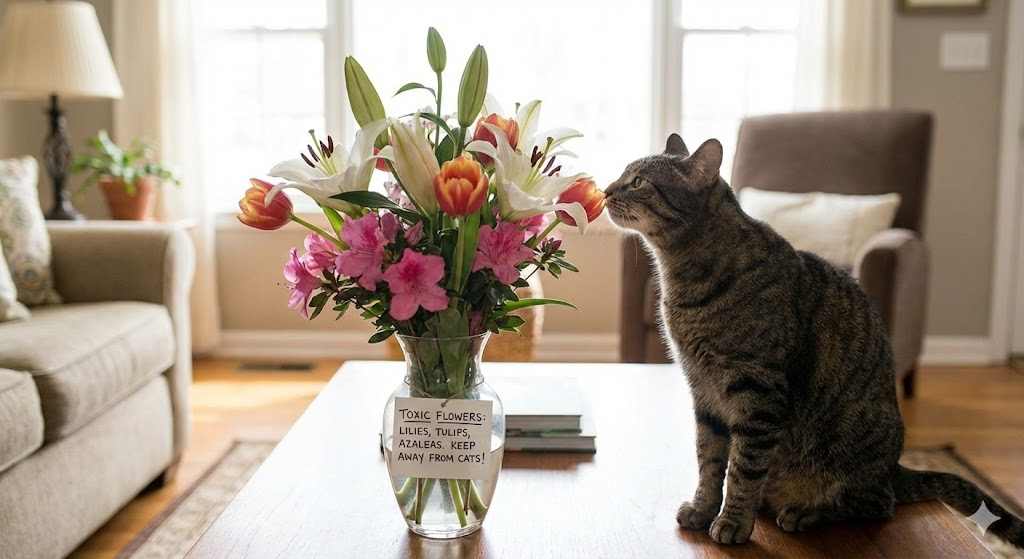
Why Even Non-Eating Exposure Can Be Dangerous
Cats don’t always need to eat a flower to be harmed.
Risks include:
- Pollen sticking to fur
- Licking paws after touching plants
- Drinking water from flower vases
This is why flowers should be kept completely out of reach.
What To Do If Your Cat Is Exposed to Toxic Flowers
If you suspect exposure:
- Remove your cat from the area immediately
- Prevent further contact with the plant
- Check for pollen on fur and gently wipe if needed
- Observe your cat closely
- Seek professional guidance if symptoms appear
Never attempt home treatments.
Why Indoor Cats Are Still at Risk
Indoor cats are not immune to plant poisoning.
Common risk sources include:
- Flower bouquets
- Decorative plants
- Gift arrangements
- Balcony or window plants
Even short exposure can be harmful.
Safe Flower Alternatives for Cat Homes
If you love flowers, consider safer options such as:
- Roses (without pesticides)
- Orchids
- Sunflowers
- Snapdragons
Always double-check safety before bringing plants home.
How to Make Your Home Cat-Friendly
Choose Plants Carefully
Research every plant before purchase.
Keep Flowers Out of Reach
High shelves are not always safe for cats.
Avoid Surprise Bouquets
Guests may bring flowers without knowing the risks.
Educate Household Members
Everyone should know which flowers are unsafe.
Why Cats Are Attracted to Flowers
Cats may interact with flowers due to:
- Curiosity
- Texture
- Smell
- Boredom
This natural behavior increases accidental exposure.
Read Also : What Foods Are Toxic to Cats
Frequently Asked Questions
What flowers are toxic to cats?
Lilies, tulips, daffodils, azaleas, chrysanthemums, and many others are toxic to cats.
Are dried flowers safer for cats?
No. Dried flowers can still contain toxic compounds.
Can cats be harmed by flower pollen?
Yes. Pollen can be extremely dangerous if ingested during grooming.
Are all lilies toxic to cats?
Yes. All true lilies are dangerous and should be avoided.
Can cats recover from flower poisoning?
Yes, especially when exposure is identified early.
Conclusion
Knowing what flowers are toxic to cats is essential for keeping your cat safe. Many popular flowers pose serious risks, even with minimal exposure. Because cats are curious and meticulous groomers, the danger is often greater than it appears.
By removing toxic flowers, choosing safer alternatives, and acting quickly if exposure occurs, you can prevent unnecessary health emergencies and ensure your cat lives in a secure, plant-safe environment.
