
Plants bring life, beauty, and calm into a home, but for cats, some plants can pose serious health risks. Cats are naturally curious and often explore plants by sniffing, chewing, or brushing against them. Unfortunately, many common household and garden plants contain substances that cats cannot safely tolerate.
If you’re asking what plants are toxic to cats, you’re already taking an important step toward protecting your pet. Knowing which plants are dangerous helps prevent accidental poisoning and allows you to create a safer living environment.
This guide covers toxic plants, symptoms of exposure, why cats are at risk, and how to prevent plant-related health problems.
Why Plants Can Be Harmful to Cats
Cats have unique digestive systems and lack certain enzymes needed to process plant toxins. Even small amounts of certain plants can cause serious reactions.
Toxic plants may affect:
- Digestive organs
- Kidneys
- Liver
- Nervous system
- Heart
Some plants are dangerous only if eaten, while others can cause harm through skin contact or pollen exposure.
Common Signs of Plant Toxicity in Cats
Symptoms can appear quickly or develop gradually depending on the plant and amount of exposure.
Watch for:
- Vomiting
- Diarrhea
- Drooling
- Loss of appetite
- Lethargy
- Mouth or tongue irritation
- Swelling of lips or face
- Difficulty breathing
- Tremors or seizures
Any sudden behavioral change after plant contact should be taken seriously.
Indoor Plants That Are Toxic to Cats
Lilies
Lilies are extremely toxic to cats. All parts of the plant, including pollen and vase water, are dangerous.
Even minimal exposure can cause severe internal damage.
Aloe Vera
Often used for skin care, aloe vera is unsafe for cats.
Symptoms include:
- Vomiting
- Diarrhea
- Tremors
- Lethargy
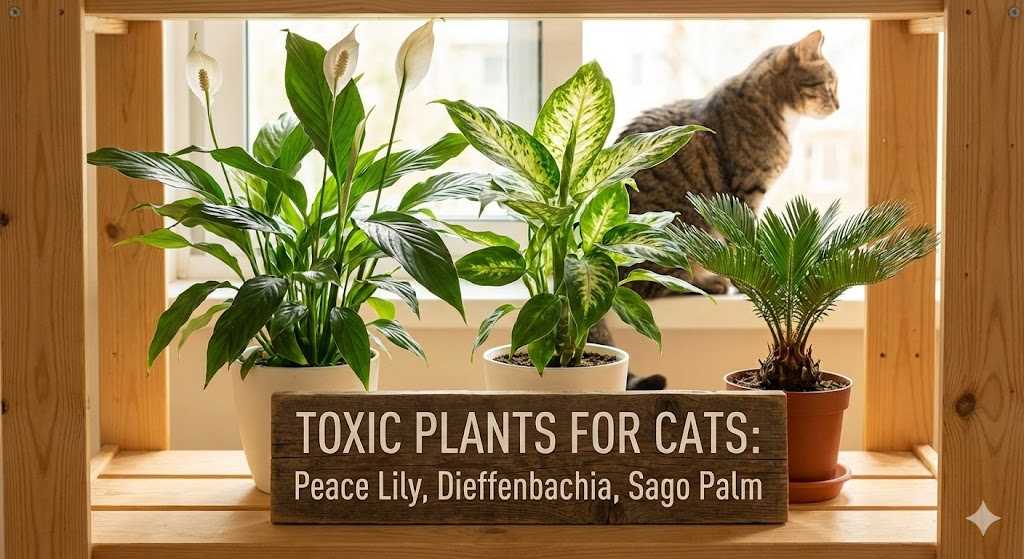
Peace Lily
Despite its name, peace lily is harmful.
It can cause:
- Mouth irritation
- Drooling
- Vomiting
- Difficulty swallowing
Pothos (Devil’s Ivy)
A popular houseplant that can irritate the mouth and digestive system.
Snake Plant
Also known as mother-in-law’s tongue, it can cause nausea and vomiting.
Philodendron
Contains substances that cause oral irritation and digestive upset.
Dieffenbachia
Also called dumb cane, it can cause swelling and pain in the mouth and throat.
ZZ Plant
This low-maintenance plant can cause digestive and skin irritation.
Jade Plant
Can cause vomiting, weakness, and coordination problems.
English Ivy
May cause drooling, vomiting, and abdominal pain.
Garden Plants That Are Toxic to Cats
Azaleas
A small amount can cause serious digestive and heart-related symptoms.
Rhododendrons
Closely related to azaleas and equally dangerous.
Oleander
Highly toxic and can affect the heart.
Foxglove
Contains compounds that interfere with heart function.
Daffodils
Bulbs are especially toxic.
Tulips
Bulbs contain the highest concentration of toxins.
Hyacinths
Bulbs pose the greatest risk.
Hydrangeas
Can cause digestive upset and lethargy.
Buttercups
Cause mouth irritation and digestive distress.
Poppies
Some varieties affect the nervous system.
Herbs and Edible Plants That Are Toxic to Cats
Not all herbs are safe.
Examples include:
- Chives
- Garlic plants
- Onion plants
- Leeks
These plants can affect red blood cells and cause weakness.
Why Cats Chew on Plants
Cats may interact with plants due to:
- Curiosity
- Texture
- Smell
- Boredom
- Natural chewing instincts
Even cats that normally ignore plants may suddenly become interested.
Can Cats Be Harmed Without Eating Plants?
Yes. Risks include:
- Pollen on fur
- Licking paws after touching plants
- Chewing fallen leaves
- Drinking water from plant containers
This makes complete avoidance important.
What To Do If Your Cat Is Exposed to a Toxic Plant
If exposure is suspected:
- Remove your cat from the area immediately
- Prevent further contact
- Check fur and mouth for plant material
- Observe behavior closely
- Seek professional help if symptoms appear
Avoid home remedies.
Why Indoor Cats Are Still at Risk
Indoor cats often encounter toxic plants through:
- Decorative houseplants
- Gift plants
- Balcony or window plants
- Seasonal decorations
Indoor living does not eliminate risk.
Safe Plant Alternatives for Cat-Friendly Homes
If you enjoy plants, consider safer options such as:
- Spider plants
- Bamboo palm
- Areca palm
- Calathea
- Boston fern
Always confirm safety before purchase.
How to Create a Cat-Safe Plant Environment
Research Before Buying
Never assume a plant is safe.
Keep Plants Completely Out of Reach
Cats can climb higher than expected.
Avoid Mixed Plant Displays
One toxic plant can contaminate others.
Educate Family and Visitors
Many plant accidents happen unknowingly.
Read Also : What Flowers Are Toxic to Cats
Frequently Asked Questions
What plants are toxic to cats?
Many common indoor and outdoor plants are toxic, including lilies, aloe vera, pothos, and azaleas.
Are small amounts of plants dangerous?
Yes. Some plants can cause serious reactions even with minimal exposure.
Are dried plants safe for cats?
No. Dried plants can still contain toxins.
Can cats recover from plant poisoning?
Yes, especially when exposure is identified early.
Should all plants be removed from a cat home?
Not necessarily. Safe plant choices allow both cats and plants to coexist.
Conclusion
Understanding what plants are toxic to cats is essential for every cat owner. Many popular plants can cause serious health problems, even with brief exposure. Because cats are curious and meticulous groomers, the risk is often higher than it appears.
By identifying toxic plants, choosing safe alternatives, and acting quickly if exposure occurs, you can create a safer environment where your cat can explore without danger.
