
Discovering that your cat may have eaten a toxic plant can be frightening. Cats are naturally curious and often nibble on leaves, flowers, or stems. While some plants are harmless, others can cause serious health problems — even from a small bite.
If you’re searching what to do if cat ate toxic plant, quick action and calm decision-making are essential. The right steps can make a significant difference in your cat’s recovery.
This guide explains what to do immediately, what symptoms to watch for, when to seek urgent help, and how to prevent plant-related accidents in the future.
Step 1: Stay Calm and Remove the Plant
The first thing to do is remain calm. Panic can delay clear thinking.
Immediately:
- Remove your cat from the plant
- Take the plant out of reach
- Prevent further chewing or contact
If possible, collect a small sample of the plant or take a clear photo. Knowing exactly what your cat consumed helps professionals assess the risk.
Step 2: Check Your Cat’s Mouth and Fur
Look for:
- Pieces of leaves in the mouth
- Pollen on the face or fur
- Chewed stems nearby
If there is visible plant material, gently remove it. If pollen is on the fur, lightly wipe it away using a damp cloth. Avoid forcing your cat’s mouth open aggressively.
Step 3: Watch for Immediate Symptoms
Symptoms can appear within minutes or take several hours depending on the plant type and amount ingested.
Common signs include:
- Vomiting
- Diarrhea
- Drooling
- Loss of appetite
- Lethargy
- Mouth irritation
- Swelling of lips or tongue
- Difficulty breathing
- Tremors
- Weakness
Even mild symptoms should not be ignored.
Step 4: Do Not Try Home Remedies
It may be tempting to:
- Induce vomiting
- Give milk
- Offer random medications
Do not attempt home treatments unless directed by a professional. Some remedies can make the situation worse.
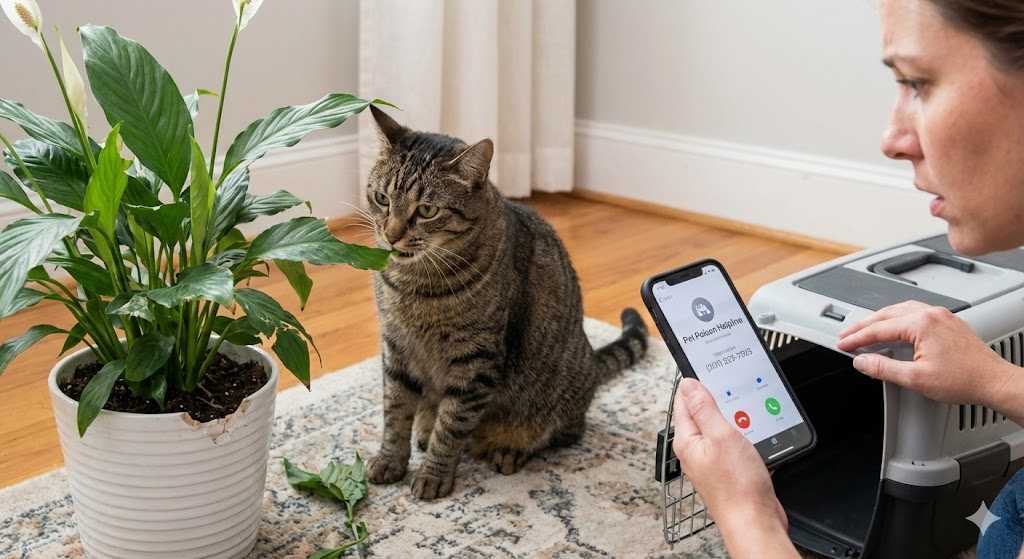
Step 5: Seek Professional Guidance Immediately
If you know or suspect your cat ate a toxic plant:
- Contact a veterinary professional right away
- Describe the plant if known
- Explain how much was eaten (if possible)
- Share any symptoms observed
If symptoms are severe — such as difficulty breathing, seizures, collapse, or extreme lethargy — treat it as an emergency.
Why Fast Action Matters
Some plants cause mild digestive upset. Others can affect:
- Kidneys
- Heart function
- Liver
- Nervous system
In certain cases, even a small amount can cause serious internal damage. Early treatment greatly improves outcomes.
High-Risk Toxic Plants
Certain plants require urgent attention even if only a small amount was eaten.
These include:
- Lilies
- Oleander
- Azaleas
- Foxglove
- Sago palm
- Tulips (especially bulbs)
- Daffodils (especially bulbs)
If your cat consumes any of these, do not wait for symptoms to appear.
Delayed Symptoms: Why Monitoring Is Important
Some plant toxins do not cause immediate signs. A cat may seem normal at first but develop symptoms hours later.
Continue monitoring for:
- Changes in drinking habits
- Reduced urination
- Loss of coordination
- Abdominal pain
- Behavioral changes
Observation for at least 24 hours after suspected exposure is important.
Indoor Cats Are Not Risk-Free
Even indoor cats may access toxic plants through:
- Decorative houseplants
- Flower bouquets
- Balcony gardens
- Holiday decorations
Many plant poisonings happen inside the home.
How Treatment Usually Works
Treatment depends on the plant and severity of exposure.
Possible approaches may include:
- Monitoring
- Fluid therapy
- Medication to control symptoms
- Supportive care
Early intervention generally leads to better recovery chances.
How to Prevent Future Plant Poisoning
Prevention is always better than emergency response.
1. Remove Toxic Plants from Your Home
Research every plant before bringing it inside.
2. Choose Cat-Safe Alternatives
Opt for non-toxic plant varieties when decorating.
3. Avoid Surprise Bouquets
Guests may unknowingly bring dangerous flowers.
4. Provide Safe Chewing Options
Offer cat grass or safe enrichment toys to reduce plant chewing behavior.
5. Keep Plants Completely Out of Reach
Remember that cats can climb high shelves and jump onto counters.
Why Cats Eat Plants
Cats may chew plants because of:
- Curiosity
- Boredom
- Texture appeal
- Smell
- Natural chewing instinct
Understanding this behavior helps reduce risk.
When It Becomes an Emergency
Seek immediate emergency care if your cat shows:
- Difficulty breathing
- Seizures
- Collapse
- Severe vomiting
- Unresponsiveness
- Abnormal heart rate
These signs require urgent attention.
Read Also : What Plants Are Toxic to Cats
Frequently Asked Questions
What should I do immediately if my cat ate a toxic plant?
Remove the plant, check your cat for symptoms, and seek professional guidance right away.
Should I wait to see if symptoms appear?
No. Some toxins cause delayed but serious damage.
Can a cat recover after eating a toxic plant?
Yes, especially if treated early.
Is vomiting always a sign of poisoning?
Not always, but it is a common early symptom.
Are small amounts safe?
Some plants are dangerous even in very small quantities.
Conclusion
Knowing what to do if cat ate toxic plant can protect your cat’s life. Quick removal of the plant, careful observation, and immediate professional guidance are key steps.
Because many common household and garden plants are harmful, prevention plays a major role in safety. By identifying toxic plants, replacing them with safe alternatives, and acting quickly during suspected exposure, you can significantly reduce the risk of serious harm.
Your cat’s curiosity is natural — protecting them from hidden plant dangers is part of responsible care.
