
Cats are naturally curious creatures. Whether it’s a houseplant, human food, medication, or a small object dropped on the floor, cats often explore the world with their mouths. Unfortunately, this curiosity can sometimes lead to a frightening situation—your cat eating something toxic.
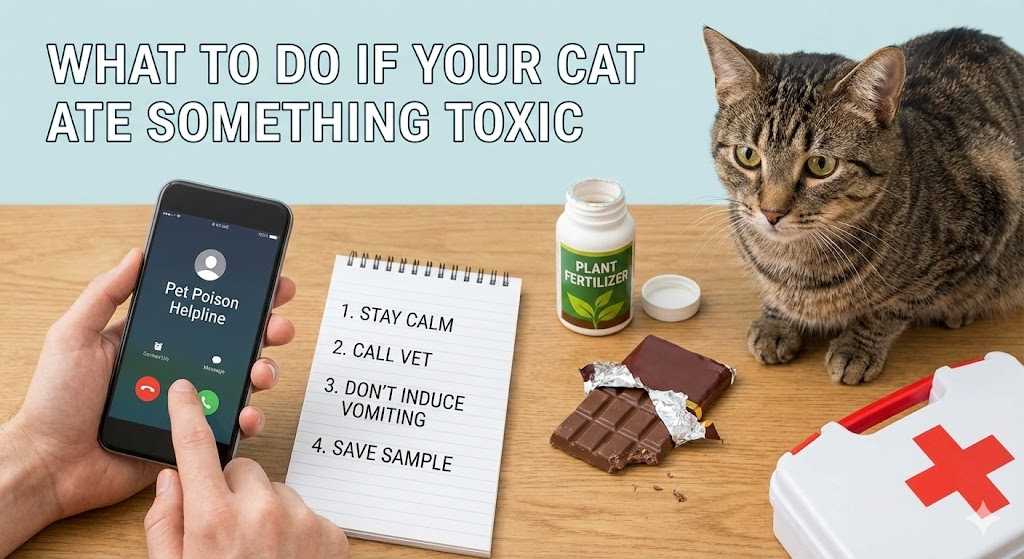
If you’re asking what to do if your cat ate something toxic, acting quickly and calmly is crucial. The right steps can make a life-saving difference, while the wrong reaction can worsen the situation.
This guide explains exactly what to do, what signs to watch for, what mistakes to avoid, and how to reduce the risk of future poisoning—using clear, practical information that any cat owner can follow.
First: Stay Calm and Observe Your Cat
Panic can lead to rushed decisions. Take a deep breath and focus on your cat’s condition.
Immediately observe:
- Your cat’s behavior
- Breathing pattern
- Level of alertness
- Any visible symptoms
Your calm response helps you act more effectively.
Common Signs a Cat May Have Eaten Something Toxic
Symptoms can appear quickly or take several hours, depending on the substance.
Watch for:
- Vomiting or retching
- Drooling or foaming at the mouth
- Diarrhea
- Lethargy or weakness
- Tremors or shaking
- Difficulty breathing
- Loss of balance
- Seizures
- Refusal to eat
- Unusual hiding behavior
Even mild symptoms should be taken seriously.
Confirm What Your Cat May Have Eaten
If possible, identify the substance.
Look for:
- Chewed plants or leaves
- Open medication bottles
- Food wrappers
- Spilled chemicals
- Bite marks on objects
Knowing what your cat ingested helps determine urgency and next steps.
What to Do Immediately If Your Cat Ate Something Toxic
Remove Access to the Substance
Prevent further exposure right away.
- Take the item away
- Block access to the area
- Move your cat to a safe, quiet space
This limits additional ingestion.
Do NOT Force Vomiting
Never try to make your cat vomit unless a professional specifically tells you to do so.
Forcing vomiting can:
- Cause choking
- Damage the throat
- Worsen chemical burns
This is a common and dangerous mistake.
Do NOT Give Human Remedies
Avoid giving:
- Milk
- Oils
- Activated charcoal without guidance
- Human medications
These can make poisoning worse or create new problems.
Check Your Cat’s Mouth and Fur
Some toxins irritate skin or mouth tissues.
- Gently look for redness or burns
- If something is on the fur, prevent licking
- Do not scrub harshly
External exposure can still be dangerous.
When to Seek Professional Help
You should seek help immediately if:
- Your cat shows symptoms
- The substance is known to be toxic
- You are unsure what was eaten
- A large amount may have been ingested
It’s always better to act early.
Information to Have Ready
If you contact a professional, be prepared to share:
- Your cat’s age and weight
- Time of exposure
- Substance involved
- Symptoms observed
- Amount possibly eaten
This information helps guide the next steps.
Why Speed Matters in Poisoning Cases
Some toxins:
- Act quickly
- Damage organs silently
- Become harder to treat over time
Early action can significantly improve outcomes.
What Happens After Exposure
Depending on the toxin, effects may include:
- Digestive irritation
- Nervous system impact
- Liver or kidney stress
- Heart rhythm changes
Some symptoms may not appear right away.
Should You Give Food or Water?
Do not force food or water.
In some cases:
- Food can worsen absorption
- Water may cause vomiting
Only offer food or water if advised.
Common Household Items That Are Toxic to Cats
Cats can be exposed to toxins through everyday items.
Common examples include:
- Certain plants
- Human foods
- Cleaning products
- Medications
- Insecticides
- Essential oils
Keeping these secured is critical.
What If Your Cat Ate a Toxic Plant?
Plant poisoning is common in cats.
Symptoms may include:
- Drooling
- Vomiting
- Mouth irritation
- Lethargy
Remove plant residue from the mouth if safe and seek guidance immediately.
What If Your Cat Ate Human Food That’s Harmful?
Some foods may cause:
- Digestive upset
- Neurological symptoms
- Organ stress
Even small amounts can be dangerous depending on the food.
What If Your Cat Ate Medication?
Human medications are especially risky.
Never assume:
- A small dose is safe
- Time will fix the issue
Medication ingestion always requires urgent attention.
What If Your Cat Licked or Touched a Toxic Substance?
Topical exposure still matters.
- Prevent grooming
- Gently rinse if advised
- Monitor closely
Cats absorb substances through skin and paws.
How Long Do Symptoms Take to Appear?
This depends on:
- Type of toxin
- Amount consumed
- Your cat’s size and health
Some effects are immediate, others delayed.
Signs of Emergency
Seek urgent help if your cat has:
- Seizures
- Trouble breathing
- Collapse
- Uncontrolled vomiting
- Loss of consciousness
These are life-threatening signs.
What NOT to Do (Very Important)
Avoid these actions:
- Waiting to “see what happens”
- Using internet home remedies
- Giving human medicine
- Inducing vomiting
- Ignoring mild symptoms
These mistakes can worsen outcomes.
Aftercare and Monitoring
Even after initial care, monitor your cat closely.
Watch for:
- Appetite changes
- Lethargy
- Vomiting
- Behavioral changes
Some toxins have delayed effects.
How to Reduce the Risk of Future Poisoning
Cat-Proof Your Home
- Store chemicals securely
- Lock away medications
- Keep food sealed
Choose Cat-Safe Plants
Avoid bringing unknown plants into the home.
Be Careful With Cleaning Products
- Use pet-safe options
- Keep cats away until surfaces dry
Watch What Falls on the Floor
Cats often investigate dropped pills or food.
Why Prevention Is So Important
Preventing exposure is always safer than treating poisoning.
Simple habits can:
- Protect your cat
- Reduce emergencies
- Provide peace of mind
Read Also : Is Cat Urine Odor Toxic to Humans
Frequently Asked Questions
What should I do if my cat ate something toxic?
Remove access, observe symptoms, and seek professional guidance immediately.
Should I make my cat vomit?
No. Never induce vomiting unless directed.
Can cats recover from poisoning?
Yes, especially when action is taken quickly.
How fast should I act?
Immediately. Time is critical.
Can mild symptoms still be serious?
Yes. Some toxins cause delayed damage.
Conclusion
Knowing what to do if your cat ate something toxic can save your cat’s life. The most important steps are staying calm, removing further exposure, avoiding dangerous home remedies, and acting quickly when symptoms appear.
Cats depend entirely on their owners for protection. By being informed, observant, and prepared, you can respond confidently and keep your cat safe from harm.
